

Former Diploma in Art & Design student Alanis is carving her own way in the Architectural Design industry
Growing up in a rural, working-class farming family on the outskirts of Pocklington, Alanis Burgess knew that she wanted to break the mould and carve out a different path for herself. Fast forward to today. Now aged 28 with three degrees under her belt and an exciting career as an Architect at P+HS Architects and a Senior Research Assistant at Northumbria University - not to mention being a committed advocate for equity, diversity and inclusion across the built environment - Alanis is certainly doing that!
And she has credited her time at York College with helping to shape both her career and the values that drive her work today. “York College introduced me to some really inspiring teachers with diverse backgrounds who had industry experience and had practised in different areas,” she says. “And I met lots of peers from different backgrounds as well.”
Alanis is forging an impressive reputation in the architecture industry, combining professional practice with research focused on creating more inclusive spaces and communities. After studying A Levels in English Literature, Maths and Art with us, followed by a Level 3 Diploma in Art & Design, she has gone on to lead major projects in the built environment sector and received regional recognition through the prestigious Constructing Excellence Awards. Since completing her Master of Architecture with Distinction from Northumbria University, she has been working within the residential team at architectural practice P+HS Architects while also carrying out research at Northumbria University, where she explores themes including gender-inclusive cities, community engagement and the ways urban environments can better support women, families and vulnerable groups. Her current research is investigating the maternal infrastructure gap within the public realm. Her research has been presented at multiple national and international conferences and featured in leading publications.

Finding a creative direction
Alanis says many of the foundations for her career were laid during her time at York College. She explains that she had always enjoyed both creative and academic subjects, and that her time at College helped her realise how those interests could come together in a future career. “I always knew I wanted to be creative in some way,” she says. “I’ve always been interested in space, experience and design, and architecture felt like a way of combining creativity with analytical thinking.”
Her studies enabled her to explore a broad range of subjects and perspectives while developing the confidence to pursue architecture as a career. A key step was her decision to stay at York College after her A Levels to complete a Level 3 Diploma in Art & Design; Alanis believes this additional year proved invaluable.
“I would say the foundation course was the start of everything I’ve gone on to do since,” she says. “It gave me that extra time to develop creatively, build my portfolio and really explore the ideas that now sit at the heart of my work.”
The project that started it all
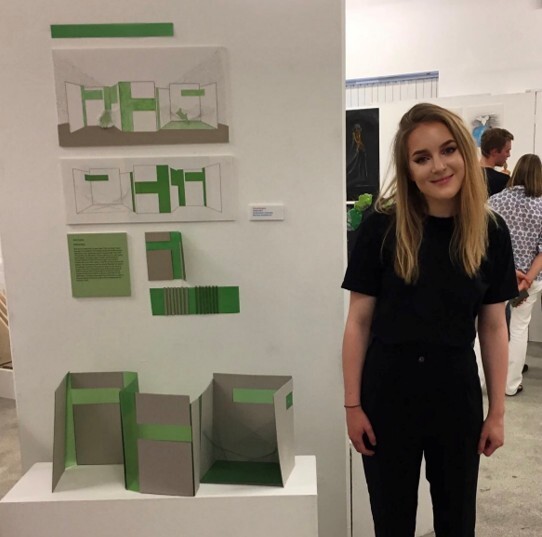
During her diploma, Alanis completed a final project centred on an inclusive reading room designed for people with dyslexia. Looking back, she now sees that project as the beginning of her long-standing interest in inclusive design. “Exploring neurodiversity and inclusive environments during that project really sparked all the work that’s continued since,” she says.
The theme followed her into university, where her subsequent projects focused on alternative educational environments and inclusive approaches to design. Today, those same principles underpin much of her professional and academic work. As an Architect, she leads projects including specialist children’s homes for young people with additional needs, while her university research examines how cities and public spaces can better support underrepresented groups.
“It’s interesting to look back and realise that many of the ideas that drive my work now can be traced back to projects I started at York College,” she adds.
Inspired by supportive tutors
Alanis is quick to praise the York College tutors who encouraged her throughout her studies. From helping her secure a place on a highly competitive architecture summer school in London to supporting university applications and portfolio development, she says staff played a significant role in helping her progress.
“Everyone was fantastic,” she explains. “My teachers were incredibly supportive and encouraged me to push myself and explore opportunities I might not otherwise have considered.” She also credits her English Literature studies with helping to develop skills that remain central to her work today.
“People might not immediately connect English Literature with architecture, but it has been surprisingly useful,” she continues. “The course developed my writing, research, critical thinking and communication skills, all of which are essential in both professional practice and academic research.”
She adds that discussions around feminist literature and social issues opened her eyes to new perspectives that would later inform her work around gender inclusion and equality in the built environment.
A place to grow
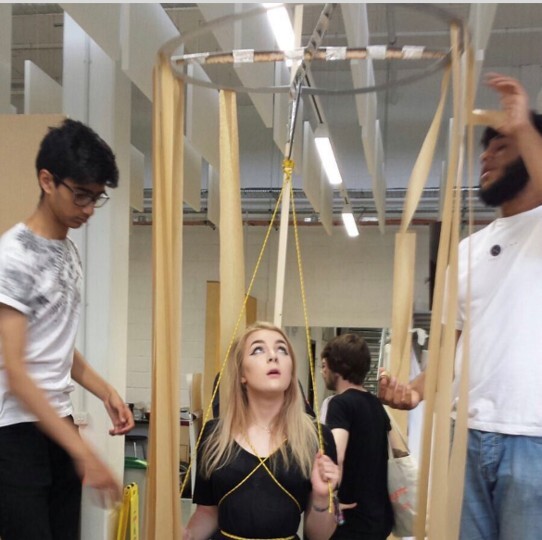
Coming from a rural background, Alanis says moving to York College gave her the opportunity to meet people from a wide range of backgrounds and broaden her horizons. “I could have stayed at my school’s sixth form, but I’m really glad I chose York College,” she says. “It felt like being part of something bigger. Meeting different people, learning from tutors with varied experiences and having access to specialist facilities all helped prepare me for university and beyond.”
She believes the College environment also helped make the transition into Higher Education easier. “It felt like a stepping stone between school and university. It gave me confidence, independence and helped me develop both academically and personally.”
Alanis was diagnosed with dyslexia and dyspraxia at university, after suspected dyslexia was picked up by College tutors who advised pursuing an assessment. She says: “A lot of architects are actually dyslexic, and it something that is actually recognised by the Royal Institute of British Architects (RIBA), our chartership body, as an ‘enhanced ability’ rather than a difficulty with a greater capacity to reason in multiple dimensions, as well as to detect and investigate complex systems, including the identification of patterns and analogies. People with dyslexia also often demonstrate heightened creativity, visualising, connecting and delivering unusual combinations of ideas and innovative thinking.”
Gaining national recognition
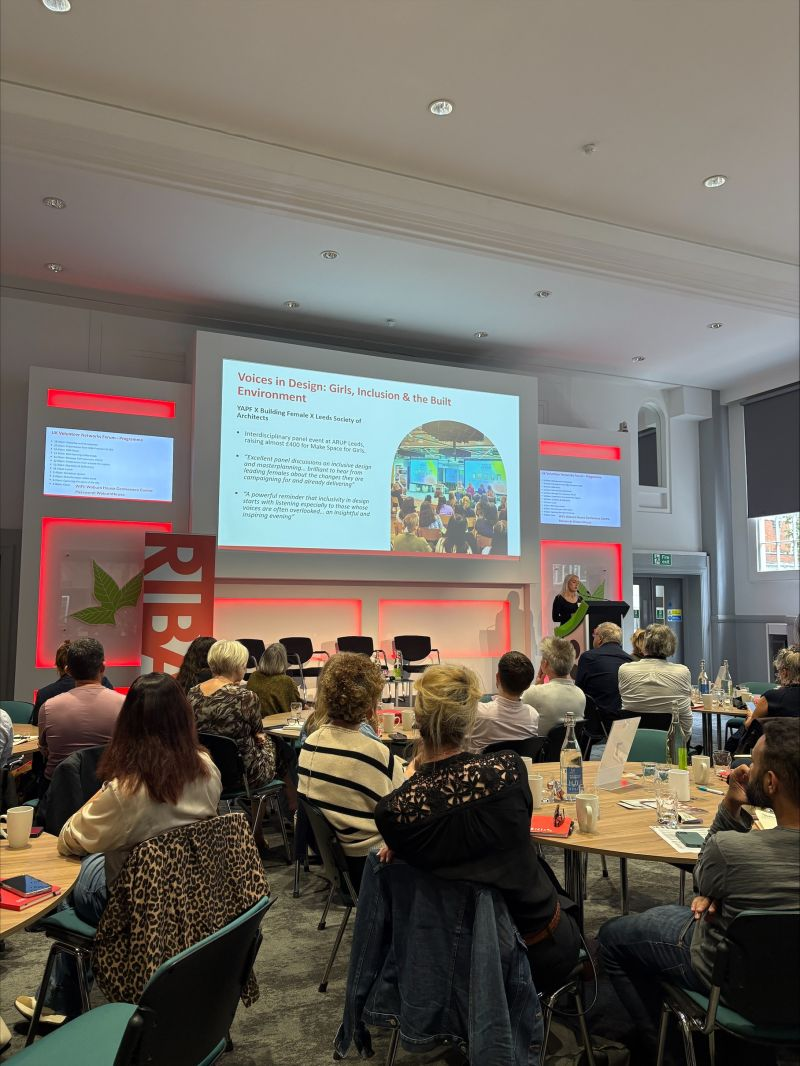
Alongside her professional and research work, Alanis is heavily involved in supporting the next generation of architects through industry networks and mentoring initiatives across the North-East of the country. She is actively engaged in the wider architectural community as Chair of the RIBA Young Architectural Practitioners’ Forum (YAPF) and sits on the RIBA North East Regional Council. As a committed advocate for equity, diversity and inclusion across the built environment, she regularly contributes to wider professional EDI initiatives and receives invitations to speak at industry events. Her contributions have already attracted significant recognition. Earlier this year, she won the regional G4C North East Future Leader Award in May after being nominated by her colleagues and is now delighted to be representing the North-East at the Constructing Excellence National Awards in London later this month.
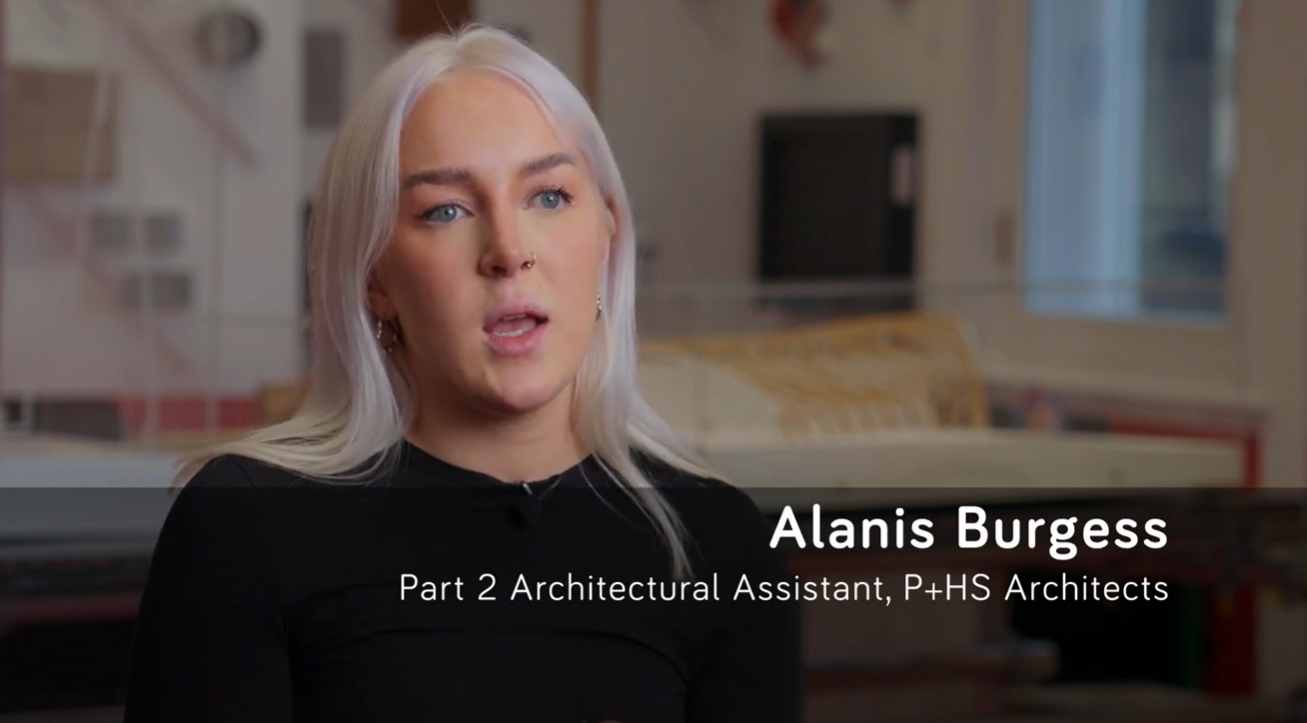
Despite the accolade, Alanis says her proudest achievement is the network and community she has built around her. “I’m a first-generation university student and I’m not from an architectural background,” she says. “This recognition reflects something I deeply care about - strengthening the dialogue between research and practice to help create a built environment that is more accessible and successful for all. I believe that goes hand-in-hand with the importance of championing inclusive early-career opportunities. To have built a career I’m passionate about and to have such a supportive professional community around me is something I’m really proud of.”
Advice for future students
Alanis is keen to encourage young people considering careers in architecture, design or the creative industries to embrace opportunities and remain open-minded. “Architecture gives you an incredibly broad set of skills,” she says. “You learn how to communicate, present ideas, solve problems, tell stories and work creatively. Those skills can take you in so many different directions. My advice would be: if you’re interested, give it a go. You never know where it might lead.”
For Alanis, that journey began at York College and has since led to a career dedicated to creating spaces, communities and opportunities that work for everyone. And, as her growing list of achievements shows, she is only just getting started.
To learn more about our UAL Art & Design Foundation Diploma Post Level 3 course, click here.
Want to discuss any of our degree, higher-level, vocational, T Level, A Level & Mix and adult courses or apprenticeships with our expert team of tutors and check out our state-of-the-art facilities? Then, please come along to our next Open Event. An overview of what to expect and upcoming dates is included here.