
Thinking about going to university as an adult? Take your next step with York College & University Centre
Have you ever thought about going to university, changing career or gaining a qualification to help you progress at work, but wondered whether it’s too late to start?
Perhaps you’ve been out of education for years, you’re juggling work and family commitments, or you’re unsure how you would afford to study. Maybe you’re worried about getting back into the swing of assignments, exams and independent learning.
Whatever is holding you back, you’re not alone – and returning to education could be more achievable than you think.
At York College & University Centre, we welcome adult learners from a wide range of backgrounds, with different experiences, responsibilities and ambitions. Whether you’re looking to take the next step in your career, retrain for something new or finally pursue a subject you’re passionate about, there are routes into higher education to help you get there.
Here’s how to get started.
You don’t need to have been in education recently
One of the biggest misconceptions about studying at degree-level as an adult is that you need to have studied recently or followed the traditional route of GCSEs, A Levels and then a degree.
That simply isn’t the case.
You might be returning to education after 10, 15 or even 20 years. You may have gained qualifications earlier in life, developed valuable skills through your career, or taken a different path altogether. Your experience counts, and there may be more options available to you than you realise.
Entry requirements vary depending on the course, but relevant work experience and previous learning may be considered. If you don’t have the qualifications needed to apply directly for a degree, there are alternative routes to help you prepare.
The important thing is not to rule yourself out before exploring your options.
How do you apply as an adult?
Applying for a degree/higher-level study for the first time – or after a long break – can feel daunting, but you don’t have to figure everything out on your own.
At York College & University Centre, the application process depends on the course you want to study.
For full-time degrees and higher-level courses, you’ll generally apply through UCAS. You’ll need to find your chosen course, check its entry requirements and use the relevant UCAS course code when completing your application. You’ll also need to provide information about your qualifications and experience, alongside a personal statement explaining your interest in the course and why you’re suited to it.
For part-time degrees and higher-level courses, you can apply directly to the College through our website.
If you’re unsure which route is right for you, or you need help understanding the application process, our Info team can point you in the right direction.
Don’t worry if you haven’t written a personal statement for years. Your reasons for wanting to study, your experience and your ambitions are all valuable starting points.
Find out how to apply to York College & University Centre
What if you don’t have the right qualifications?
Not having A Levels or equivalent qualifications doesn’t necessarily mean degree-level study is out of reach.
Our Access to Higher Education (HE) Diplomas are designed for adults who want to progress to university but need to gain the qualifications, knowledge and confidence to get there.
We offer Access to HE pathways in a range of subject areas, including Art and Design, Business, Education Professions, Health Science Professions, Humanities, Medicine, Science and Social Sciences.
These courses help you develop the academic skills needed for higher-level study while building your subject knowledge and preparing you for the demands of university.
Depending on your circumstances and chosen pathway, you may be able to study full-time or part-time, helping you find an option that works for you.
An Access course can be a great way to rediscover your confidence, explore a new subject and take a clear step towards your future ambitions.
Explore Access to Higher Education courses
Can you afford to go study a degree as an adult?
Finances are understandably a major consideration, particularly if you have a mortgage or rent to pay, children to support or other household commitments.
The good news is that financial support may be available to help make higher education more accessible.
Eligible students studying undergraduate higher education courses may be able to apply for tuition fee and maintenance loans through Student Finance England. Depending on your circumstances and course, other forms of support may also be available.
If you’re considering an Access to HE Diploma, you may be eligible for an Advanced Learner Loan to help cover your course fees. If you then complete an eligible higher education course, the outstanding balance of your Access course loan can be written off, subject to the relevant conditions.
Funding eligibility varies, so it’s important to check what applies to your individual circumstances before making a decision.
Our Funding Team can offer advice on student finance, course fees and potential bursaries, helping you understand the options available before you commit to studying.
You don’t need to have all the financial answers before getting in touch. Speaking to our team is a useful first step towards understanding what studying could look like for you.
Find out more about funding your studies
Worried about fitting study around work and family life?
Going back to education doesn’t have to mean putting the rest of your life on hold.
Many adult learners balance their studies with employment, childcare, caring responsibilities and everything else that comes with everyday life. That’s why it’s important to find a course and study pattern that works for you.
Depending on your chosen subject, you may be able to study part-time rather than full-time. We also offer a range of adult courses with evening and daytime options, while some higher education courses have different attendance patterns.
Before applying, think about how much time you can realistically dedicate to studying, including travel, assignments and independent learning. Checking the timetable and discussing your commitments with the College can help you make an informed decision.
It’s also worth remembering that you don’t need to have everything perfectly organised before you begin. Taking time to explore your options can help you find a route that fits around your existing responsibilities and long-term goals.
What if you’re worried about your study skills?
If it’s been a long time since you last sat in a classroom, you might be wondering whether you’ll remember how to write an assignment, reference sources, take effective notes or prepare for assessments.
These are common concerns, particularly for people returning to education after several years away.
Higher education will introduce you to new challenges, but you won’t be expected to arrive knowing everything already. Learning how to research, organise your workload, write academically and manage independent study is part of the process.
Access to HE courses can help you build these skills before progressing to a degree. Depending on your course and individual needs, support may also be available to help you develop your academic skills, access learning resources and manage your studies.
If you have a disability, learning difficulty or other additional support needs, it’s worth contacting the College before you start so you can discuss the support available and any arrangements you may need.
Remember, you’re not starting from scratch. Your life and work experience have already helped you develop skills such as communication, organisation, problem-solving and resilience – all of which can be valuable in higher education.
Will I fit in with the other students?
It’s natural to wonder whether you’ll be the oldest person in the room, particularly if you’re imagining a university experience made up entirely of school leavers.
In reality, adult learners bring a wide range of experiences, backgrounds and perspectives to their studies. Some are changing careers, others are progressing in their current profession, and many are pursuing ambitions they’ve put aside while focusing on work or family life.
You may find yourself learning alongside people who share similar responsibilities, interests or goals, as well as classmates whose experiences are different from your own.
Studying with people from different backgrounds can be a real strength. You’ll have opportunities to share ideas, learn from each other and build connections that extend beyond the classroom.
At York College & University Centre, you can explore higher education in a welcoming environment where your individual experience and ambitions matter.
You don’t need to fit a particular mould to belong in higher education.
Take the first step towards your future
Going back to education is a big decision, and it’s completely understandable to have questions about entry requirements, funding, study commitments or whether university is right for you.
But you don’t need to have everything figured out today.
Start by exploring the courses that interest you. Look at the entry requirements, consider whether full-time or part-time study would suit your circumstances, and find out what financial support may be available.
If you’re unsure where to begin, get in touch with us. We can help you explore your options, discuss possible progression routes and answer your questions.
You can also visit us at an Open Event to find out more about our courses, speak to staff and get a feel for the College before making a decision.
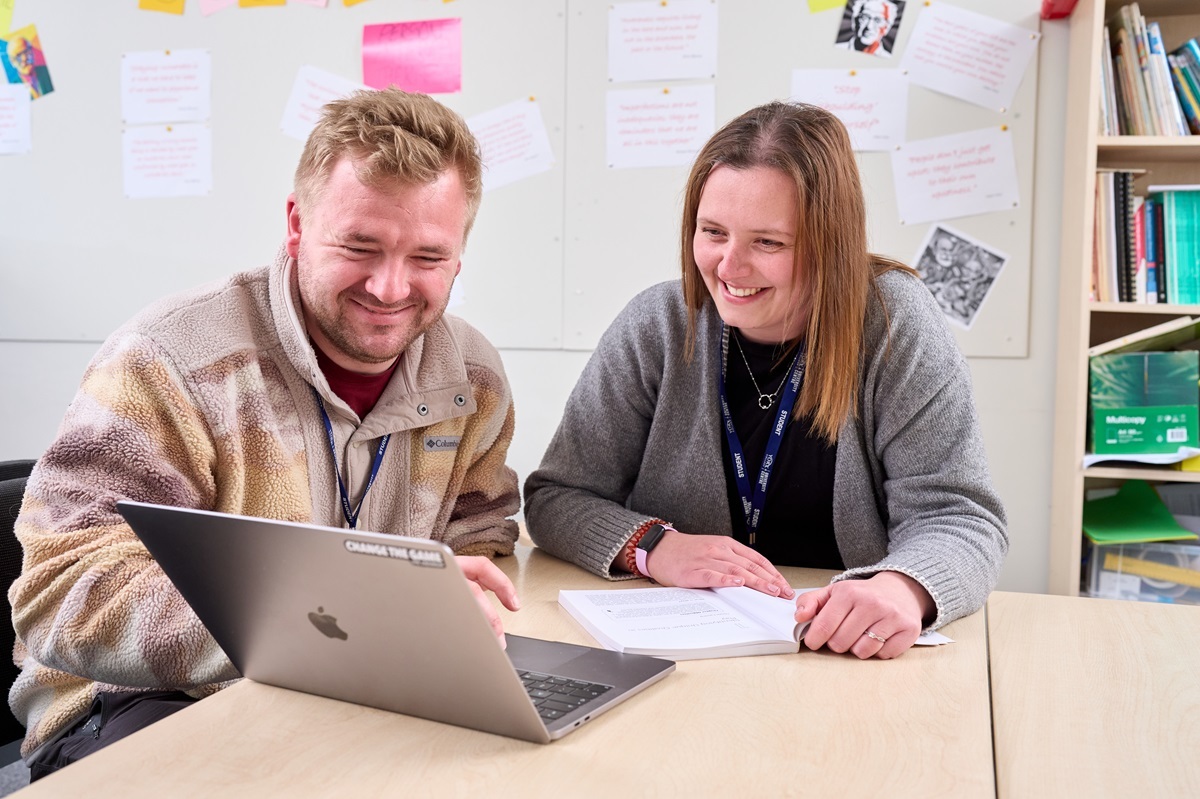
Rebecca - FD Children's Development & Learning and BA (Hons) Leading Children's Development & Learning
Rebecca never imagined she would attend a graduation ceremony after failing her A Levels - but thanks to York College & University Centre, she’s now on track to celebrate her third.
Nine years ago, she returned to education to complete the Access to HE Diploma (Education Professions) course before taking time out to raise her children.
In 2023, she came back to College to study the FD Children’s Development & Learning while working as a SEND Teaching Assistant in a primary school. She has since completed the BA (Hons) Leading Children’s Development & Learning degree.
"Balancing two children, full‑time work and College has been challenging, but the support has been amazing. Staff check in regularly, and my school has been really understanding. Being in College one day a week and studying in the evenings works well around family life."
Your next step could be closer than you think.
Whether you’re looking to change career, progress at work or achieve a long-held ambition, we’re here to help you explore what’s possible.
Explore courses at York College & University Centre
Find out more about applying to our University Centre
Apply for full-time degree courses via UCAS
Book your place at an Open Event or Taster Session