
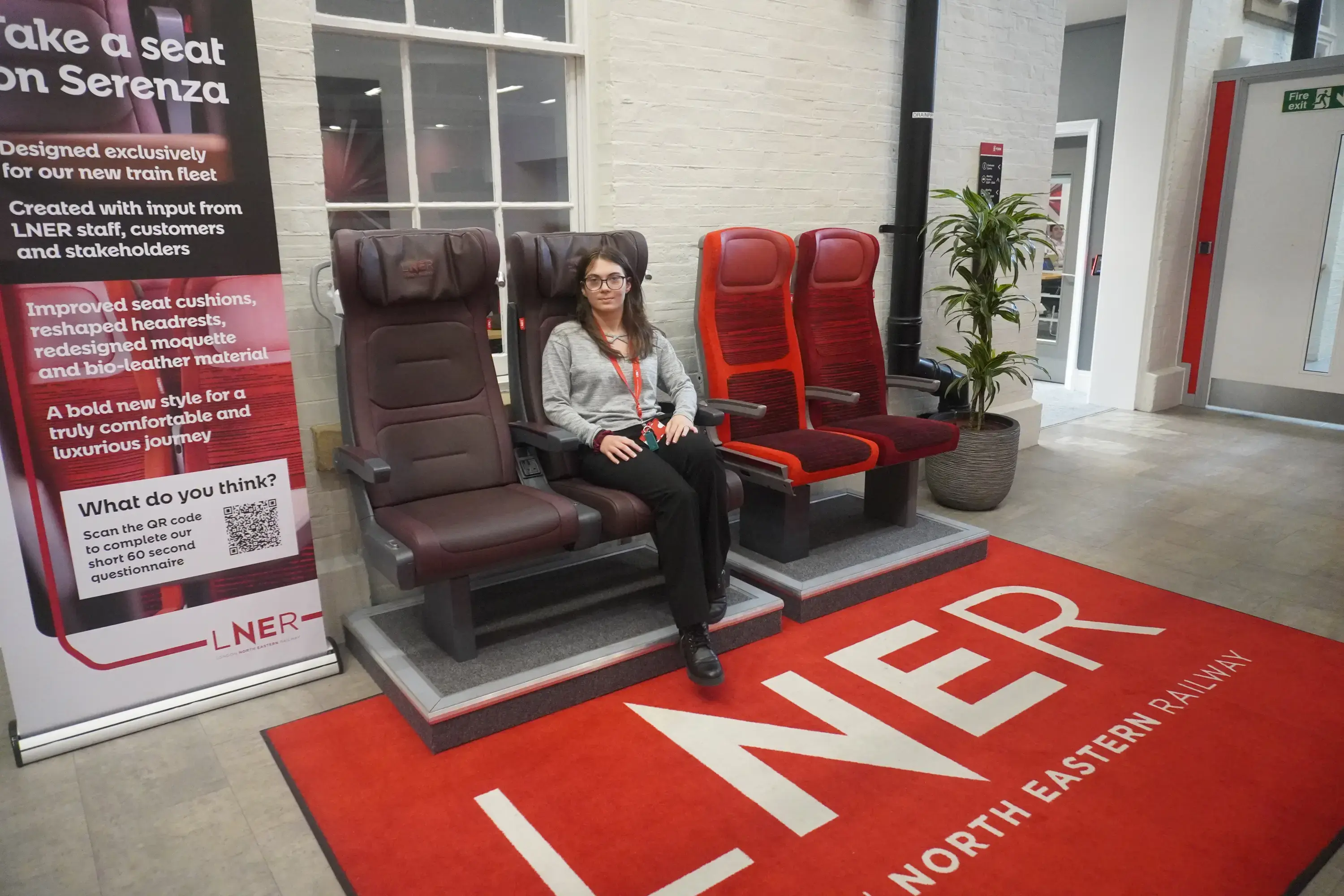
Cybersecurity T Level student Jasmine unlocks new skills and passions on LNER placement
A work placement with LNER is helping Cybersecurity T Level student Jasmie Mawson unlock new skills and passions that will help shape her future.
Jasmine, who is in the second year of her Digital Support & Security course, now has a love for analyst work and has become a more efficient researcher, whilst also demonstrating new-found communication confidence in team meetings.
A career in technology was never really in doubt for Jasmine. Finding the right route to get there was her biggest hurdle.
Her post-16 decision to study a T Level qualification has proven the perfect choice, though, as she gains practical experience through her 315 placement hours as part of LNER’s Information Security Team alongside her classroom learning.
Looking back now, Jasmine recalls how she always wanted to pursue something in technology, but that traditional A Levels weren’t the right fit for her.
“I chose to study a T Level because I didn't really fancy A Levels,” she explained. “If I did, it would have been Computer Science because this was the one thing I was certain on.
“I just knew that I wanted to do something techie. I decided that cybersecurity would look great on my CV because it’s quite specific and I thought it sounded really interesting.”
Starting College was initially daunting, particularly without the familiar faces of her school friends. However, Jasmine soon realised that taking a chance and reaching out to someone new was one of the best decisions she could have made.
“I was surprised by how lovely my class was,” she enthused. “There are some really great people and I’ve made some nice friends.
“If I could look back on my first day of College, I’d tell myself to stop stressing. I was genuinely terrified, because I was alone on my first day without any of the friends that I’d been at school with.
“I felt completely thrown in at the deep end but there was one other girl in the classroom when I arrived, so I went and sat next to her. This was the best decision I ever made because we’re great friends now.”
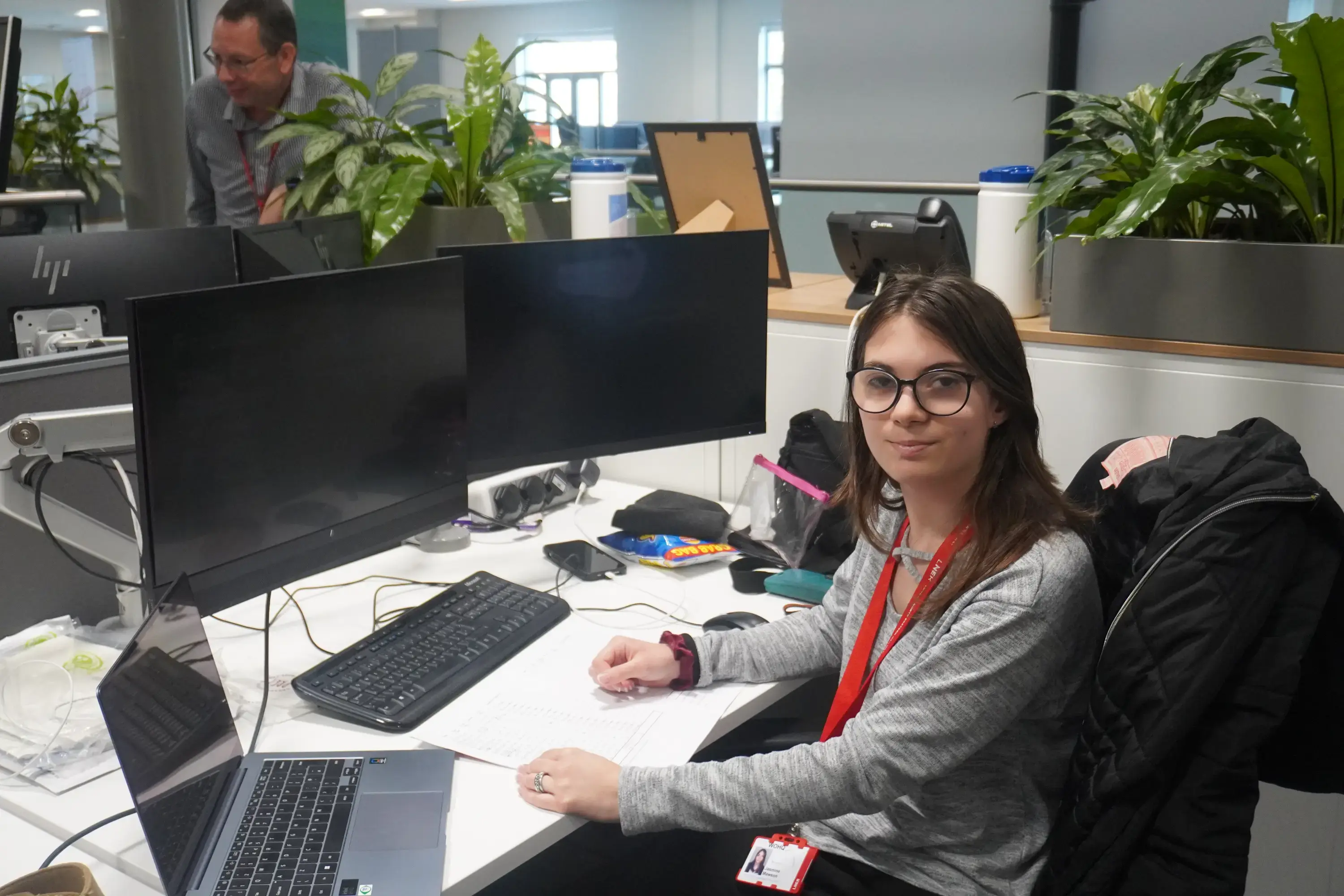
When it came to finding a work placement, Jasmine wanted an opportunity that would challenge her and give her a genuine insight into cybersecurity, rather than simply a general IT support role.
Her placement mentor, Rob Cooper, Senior Information Security Analyst at LNER, was keen to help welcome her to the industry and the team she’d be working with.
“Cybersecurity is a growing industry so it's good to be able to give an opportunity to somebody looking for a placement,” Rob said. “It’s great to be able show Jasmine what it's actually like before she starts her career.”
Rob began by giving Jasmine a broad overview of the team and its work, helping her understand the wider picture before introducing her to some of the tasks within his role.
“I started by giving Jasmine as much of an overview as possible,” he pointed out. “I wanted her to know where she’d be working, who she’d be working with. If you’re working in an office you've never been in before, you won’t be sure what everyone does.
“I said, ‘Imagine yourself in a helicopter. At first, we'll be flying pretty high, so you can see loads and, then, every week, we'll fly a bit lower until we've got our boots on the ground’.”
Jasmine was initially nervous, but the support she received helped her settle into the role and become an increasingly active member of the team.
“I was pretty scared the first day if I’m honest,” she confessed. “But my mentor Rob really helped with the fact that I was anxious and he calmed my nerves.”
Jasmine’s placement offers an insight into the day-to-day work of cybersecurity, from monitoring alerts to exploring the tools organisations use.
“On a typical day on my placement, I go through any alerts we have received and then Rob and I decide what we are going to do for the day,” she pointed out. “The role involves a fair amount of research on different things and we look at threat intelligence systems which is pretty cool.”
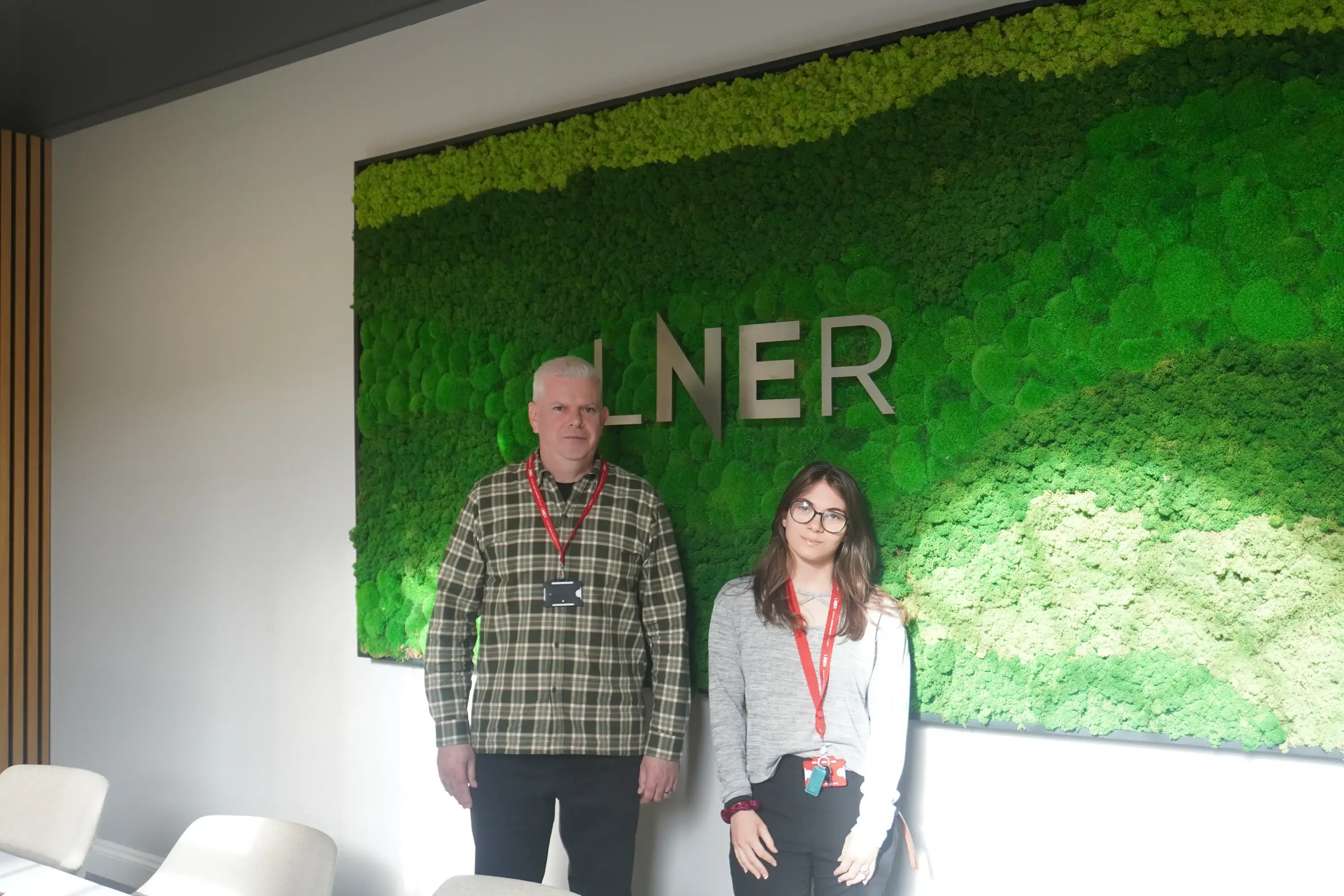
The opportunity to contribute ideas and take part in meaningful work has been one of the most rewarding aspects of her experience.
“It’s been great to put my ideas forward,” she admitted. “It has been slightly scary sharing my ideas because I’ve been making some fairly big decisions, but there's the rest of the team involved too who support me.”
Jasmine has also attended demonstrations from companies supplying cybersecurity platforms and has carried out research into potential alternatives.
“I’ve attended demonstrations from different companies that supply platforms,” she added. “Because we’re a government company, we have to keep the way we work fair and look at options. So, I did some research and picked out some that I thought would be a good alternative to what we were already using.”
For Rob, giving Jasmine responsibility for real work has been an important part of her development.
“I think talking about something that you've actually done is easier than explaining what someone else has done,” he reasoned. “I’ve made sure Jasmine has had real work as well. She’s been contributing to stuff that matters, especially the research she’s been doing.”
He has also been impressed by the way Jasmine has adapted to new challenges.
“I’ve been most impressed by the growth that I’ve seen in Jasmine,” Rob declared. “Obviously, anyone would be petrified on day one and I was well aware of that. I hope I made allowances for that and helped Jasmine feel welcome. But, also, you can't just relax and create your own little bubble, so it's also important to push her as well, in a mindful way.”
One of the biggest advantages of Jasmine’s T Level is the way her college studies mirror the experience she gains at LNER.
“There’s so many things that I’ve learnt at College that I use on my work placement,” she reflected. “Someone on the team at LNER will say something and I'll think, ‘I actually know what they're talking about!’ The course is very relevant, the college work and the placement go really well together.”
Her learning around report writing has been particularly useful, allowing her to apply classroom skills to real-world research.
“On my College course we’ve learnt about report writing which has been really helpful. In the classroom, it's based off examples and hypotheticals, then on my placement I’m completing research and writing about things that are actually happening. It makes it more meaningful.”
The experience has also helped Jasmine recognise how much her research skills have improved.
“The course has developed my confidence in my abilities, especially with my researching skills,” she said. “I remember doing some Geography homework in Year 10. I was researching for hours to try and find one little bit of information. Now I feel like I'm a so much more efficient researcher and I actually know what I'm doing.”
For Rob, the work-focused nature of T Levels is a real benefit for both students and employers.
“The T Level format is so valuable because it’s work oriented,” he said. “It’s gaining real knowledge in a real workplace.
“Jasmine's part of the team now. She's contributing to the team and working on things that matter. Completing a T Level and work placement gives you an edge, because you've been in a workplace.”
Rob believes that experience can give students an advantage when applying for future roles, helping them use real examples and ask more specific questions during interviews.
“If Jasmine went to an interview, she'd be able to ask the usual questions, but she'd also be able to ask, ‘Where does my work come from?’ or ‘What systems do you use?’ and, then, she’d be able to build conversations on real experiences,” he pointed out. “It’s those types of skills that are over and above.”
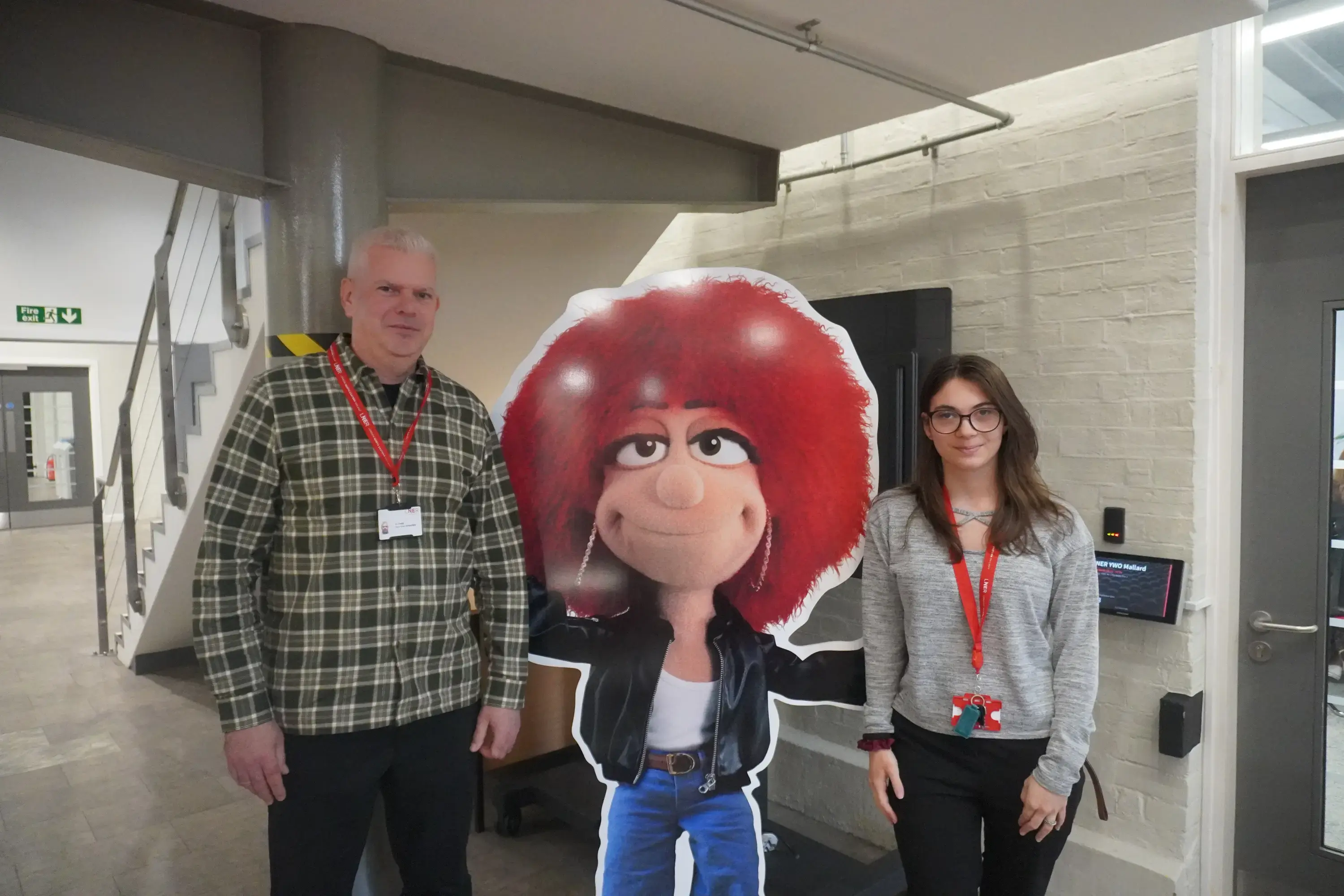
Jasmine’s placement has also helped her develop communication skills and the confidence to step outside her comfort zone.
“The most challenging aspect of my placement has been the sprint meetings,” she revealed. “In project management, you are working in two-weeks chunks. I’ve had to talk about what I've been doing in that week.
“Initially, Rob would speak for me and, then, I’ve been doing the talking myself. It was quite a big thing to get past because I hate doing things like that, but I did it.”
Rob recognised that speaking in front of colleagues was difficult for Jasmine, but encouraged her to give it a go.
“It was really important that she tried and the next time she did it, it was easier,” he said. “Each time, she’ll have that little bit more confidence to speak and share.”
He believes adaptability and resilience are particularly important in cybersecurity, where the landscape is ever changing.
“Since the beginning of her placement, Jasmine has really developed her ability to react to change quickly and be resilient,” he declared. “She’s now not afraid to step outside of her comfort zone. In this kind of industry, you basically end up with not having a comfort zone. That ability just comes with time and experience.”
Jasmine’s placement has also opened her eyes to the variety of work available within the industry. While she originally chose cybersecurity because it sounded interesting, she has discovered a new love.
“From working at LNER, I’ve learnt that I really like the analyst type of stuff, which I hadn’t considered before,” she explained.
She has also gained a greater appreciation of the many different ways information can be protected, including some that she hadn’t thought of.
“I now have a better understanding of how broad cybersecurity is, it’s really surprised me,” she confessed.
“For example, I now know a large amount about mechanical door locks! It’s not something I’d ever thought about, but it’s a way of protecting information. A colleague provided me with a full lesson at one point. The benefits, the maths, the coding, how often you need to change them, how often you need to clean them. I’m now an expert!”
For Rob, Jasmine’s approach to research and problem solving has revealed where her strengths lie.
“Pretty early on I thought that Jasmine would make a great analyst and I think I was right,” he said. “She’s very thoughtful and good at deep thinking.”
For anyone considering a T Level in cybersecurity, Jasmine recommends exploring the subject before committing to find out whether it sparks their curiosity.
“To anyone considering a T Level in cybersecurity, to see if it’s for them I’d recommend that they research a couple of cyber-attacks,” she advised. “Cyber-attacks are getting more and more common and, if when researching them, it sparks questions like, ‘How do we stop that?’ or ‘How could that have been avoided?’ then it shows you have an interest there.”
Rob agrees that curiosity is an essential starting point for anyone interested in a career in the sector.
“I think Jasmine nailed it when she said that you have to be interested,” he concurred. “It’s the key thing.”
As Jasmine approaches the end of her T Level, she is considering her next steps, with both an apprenticeship and university among the options she would like to explore.
“After I complete my T Level, I’d like to look for an apprenticeship or go to university,” she said. “There are some good cybersecurity options out there which are quite specific.”
Her experience at LNER has given her more than technical knowledge. She has developed her research abilities, discovered an interest in analysis, contributed to meaningful projects and grown in confidence.
For Rob, seeing that progress has been one of the most rewarding parts of supporting a T Level student.
“It’s been really nice to pass on my knowledge to Jasmine,” he summarised. “Also, seeing her develop as a person has been extremely satisfying. She’s grown so much in confidence since she started her placement.”
Learn more
For more information on LNER, click here.
To learn more about T Levels at York College, click here.