
Engineering T Level student creates product to save Network Rail more than £1m in delay costs
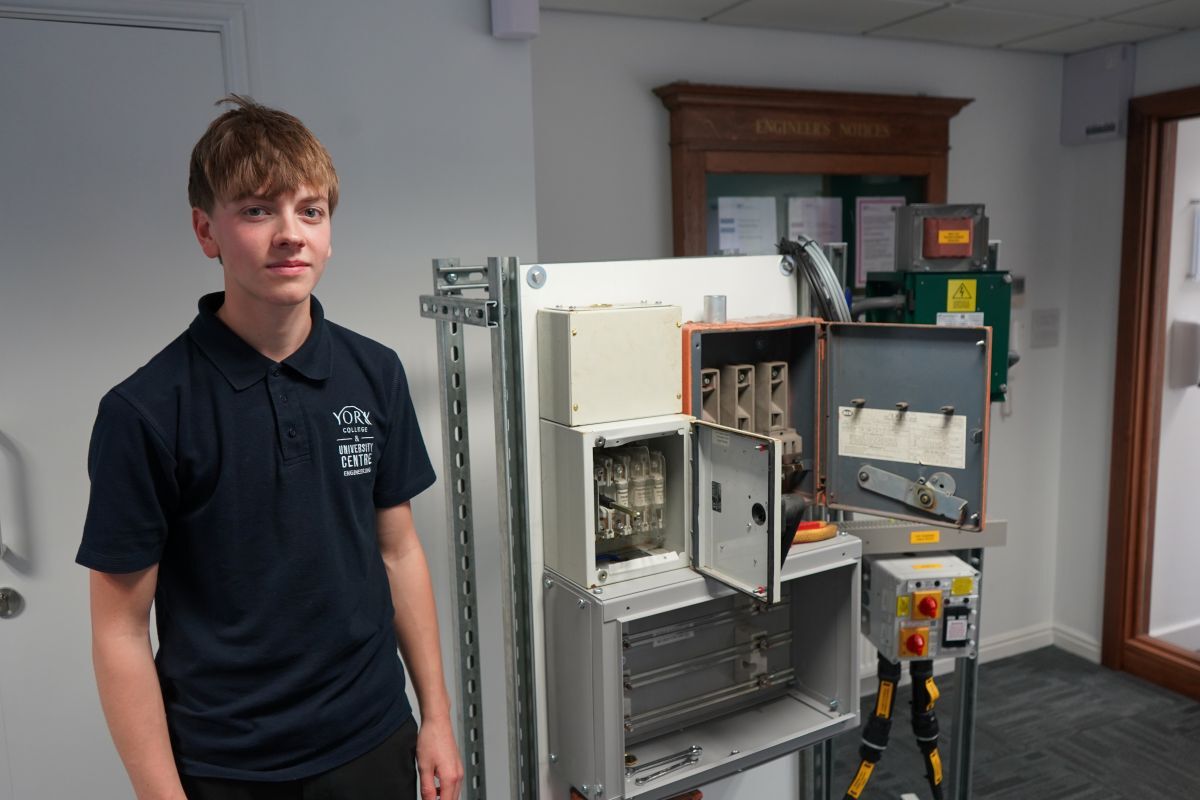
Hugely talented York College Engineering T Level student Jackson Hall has created a product that is saving Network Rail more than £1million in delay costs.
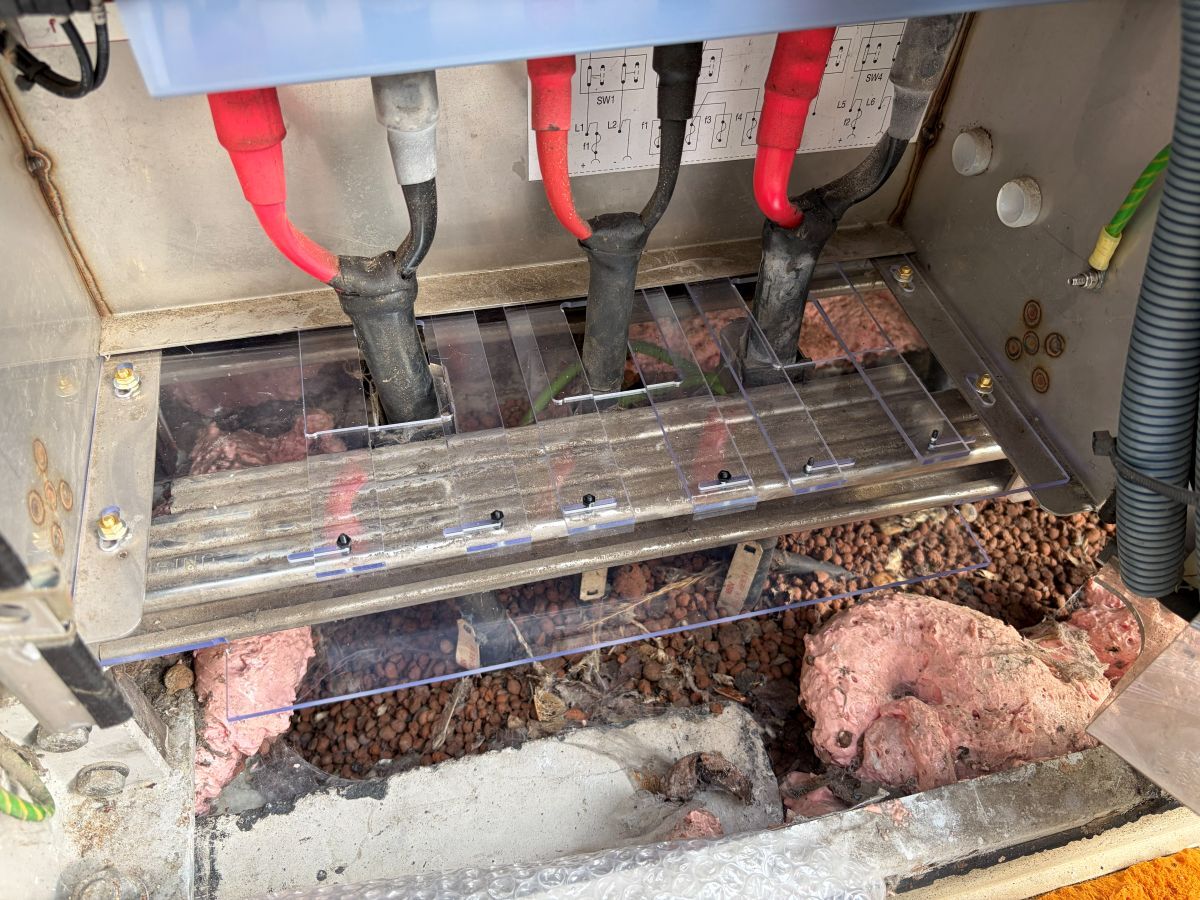
Jackson, 17, was tasked with finding a solution after his placement providers AGH Engineering were approached by the public-owned transport operator to look into an issue where rats and other animals were accessing ageing signal boxes in the Leeds area and chewing cables, resulting in “miles and miles” of track being rendered out of service.
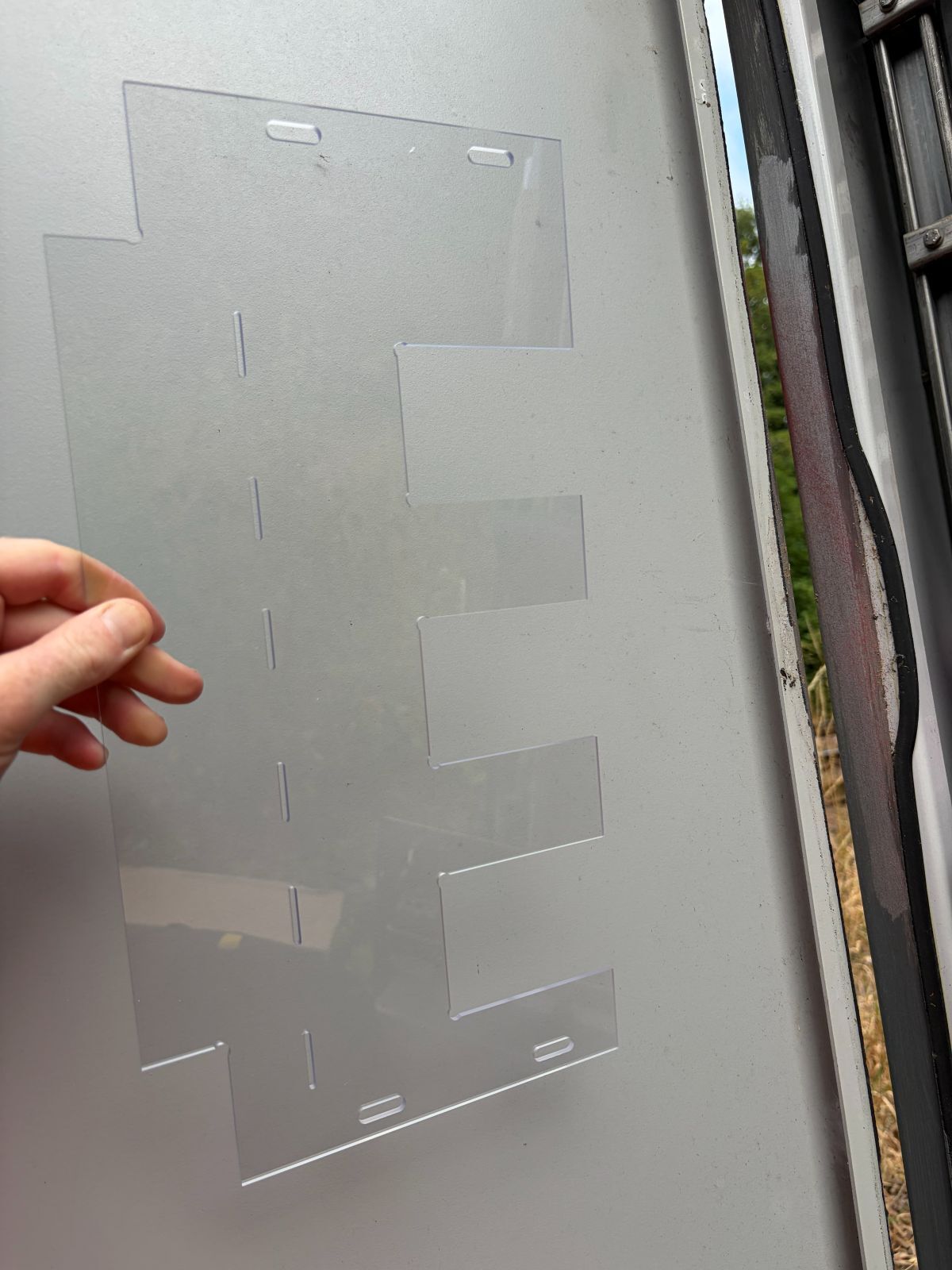
After a site visit, Jackson brought back one example of the problematic equipment to AGH’s city-centre office in York and worked on a remedy using a 3D scanner and Computer-Aided Design (CAD) software, which he had been introduced to during the first year of his Design & Development: Manufacturing & Engineering course at College.
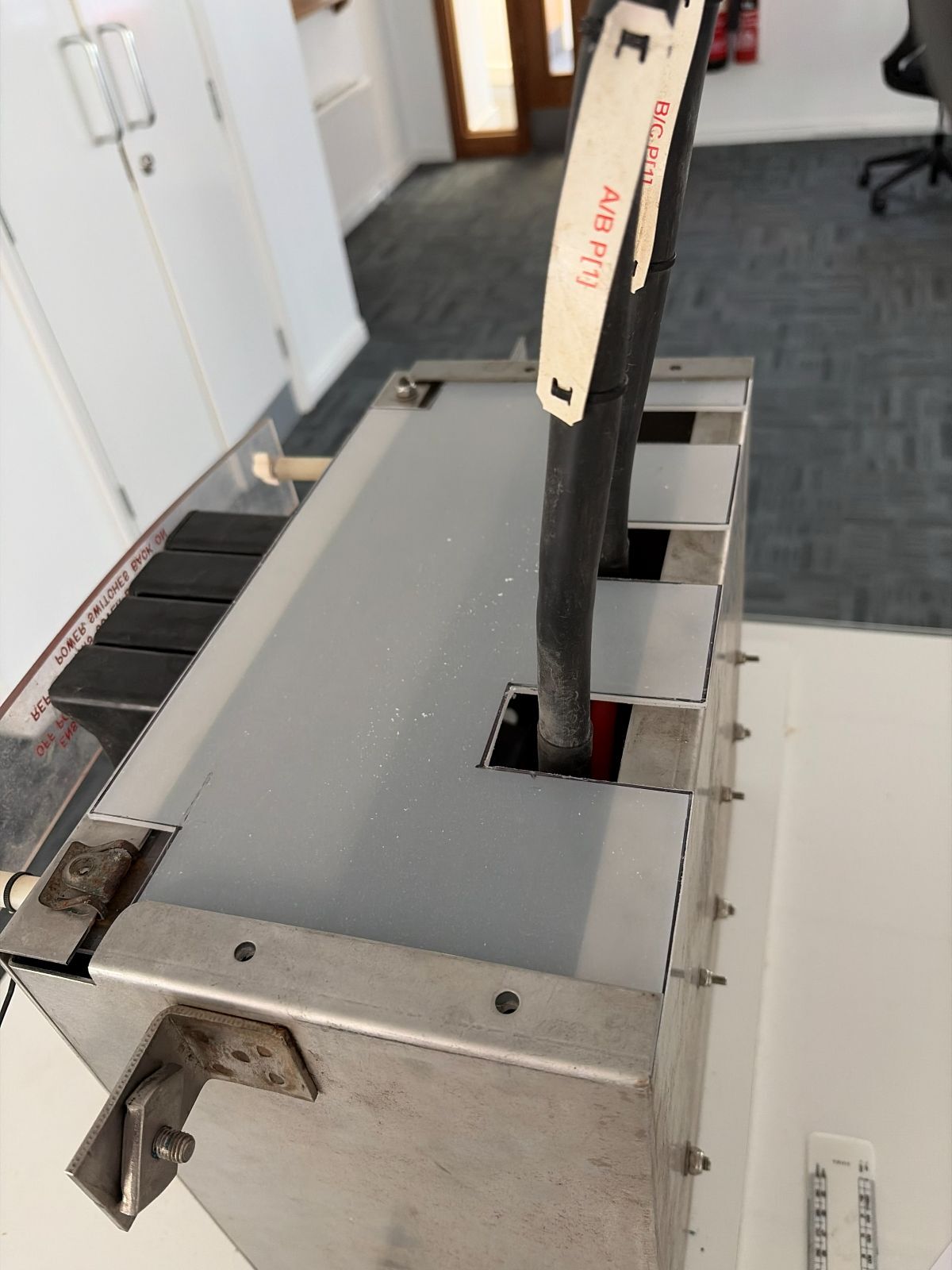
His first polycarbonate prototype was then fabricated and, after it fell just short of resolving the problem following another site visit, he made the necessary tweaks to come up with a second product that did the trick and has now been implemented – considerably enhancing the experience of train users in the Leeds area, as well as saving the lives of a few rats!
Jackson’s ingenuity has also helped enhance AGH’s reputation in the rail industry with key client Network Rail regarding their £25,000 investment as money very well spent.
In return, AGH have already offered Jackson a job as a Design Technician on completion of his T Level studies next summer and will pay for him to secure a HND qualification.
Commenting on the seven-figured solution Jackson provided for Network Rail, AGH Principal Engineer Adam Wood said: “Two of Adam’s screens have already been installed for Network Rail in the signal boxes and there’s a plan to introduce a further 63. It’s all come from his ideas and thought process, which is impressive for a student coming to us at the age of 17.
“There are staff that we work with and colleagues in Network Rail in quite influential positions, who are aware of what Jackson has done and it has impressed them. We’ve made it clear to everybody this has come from our links with York College and a student who is on the T Level pathway.
“It shows there are good students coming through and it's clearly a nice thing for them to understand and see. The tweaks that Jackson made to his first prototype meant it could be adapted across all the troublesome locations, with Network Rail then instructing us to provide a quote for rolling it out across all 65 locations.
“This issue isn’t just unique to Leeds as well so, ultimately, the solution could be rolled out wherever they are nationwide, which is great. Sometimes, a simple idea can become a very efficient way of saving delay minutes, which is obviously great for Network Rail and cost saving, but there's also a wider impact to passengers and rail operators and, when you start looking at the knock-on effect, the numbers clearly start to increase exponentially.
“We were talking around covering £25,000 in costs for the job and, when you’re looking at the ongoing savings for Network Rail, in terms of limiting that cable fault by stopping animals getting in, there was a recent delay at Leeds station where they had a power failure and that cost Network Rail north of £1million alone.”
On how Jackson’s troubleshooting talent has had a positive effect on AGH’s standing within the rail industry, Adam added: “For Jackson to deliver something that has future proofed and negated an issue has enhanced the confidence the client has in our company. We're very experienced in our field and trusted, not only to produce designs, but also to offer a consultancy service and wider guidance on where we think you can improve the resilience of your network at a minimal cost and that's a big thing, especially when finances and funding across the board are at a pinch-point in the current climate.
“This example enhances Network Rail’s understanding of what we do and equally promotes wider conversations they will be having with other service providers that might be having the same problem. They’ll be asking who developed the solution and AGH Engineering’s name will crop up, which naturally helps our reputation and our forward work balance.”
Adam is also quick to credit York College for providing Jackson with the skills to hit the ground running when starting a four-week block placement in June that has now switched to one day a week during his second year of studies.
“His CAD skills were very good from the start, which will have come from the course he’s doing,” Adam pointed out. “We work with a slightly different software package called AutoCAD, but the transferrable skills were clearly there.
“He came in with that base knowledge which, for us, shows a passion for learning and picking things up very quickly. We also use electrical, calculation and lighting design software and he was able to pick that up very quickly because, at College, he’s become very used to working with different applications.
“What we tend to find in some students, outside of the T Level, is their report and specification writing skills needs a bit of work but, with Jackson, his task brief sheets and work package plans, before we went out and did surveys, demonstrated a very good understanding of how to write a specification, the terminology to use and how to structure it. That can often be quite a long-term development but, from a starting point, he was able to go on site, interpret what he’d seen and then narrate that in a document and I was pleasantly surprised by that.
“He’s a confident student, who’s proactiveness is very impressive, and is keen to learn all about the rail industry. He’s very humble, too, but also really driven to do well both here and with his College work and that dedication has impressed us.
“He’s incredibly punctual, willing to take on any task and, when he attended sites in the early stages of his placement, was very inquisitive. He seemed to really enjoy seeing that live engineering aspect and how we then bring things back to the office and create CAD drawings and models of what we've seen and what we need to modify.”
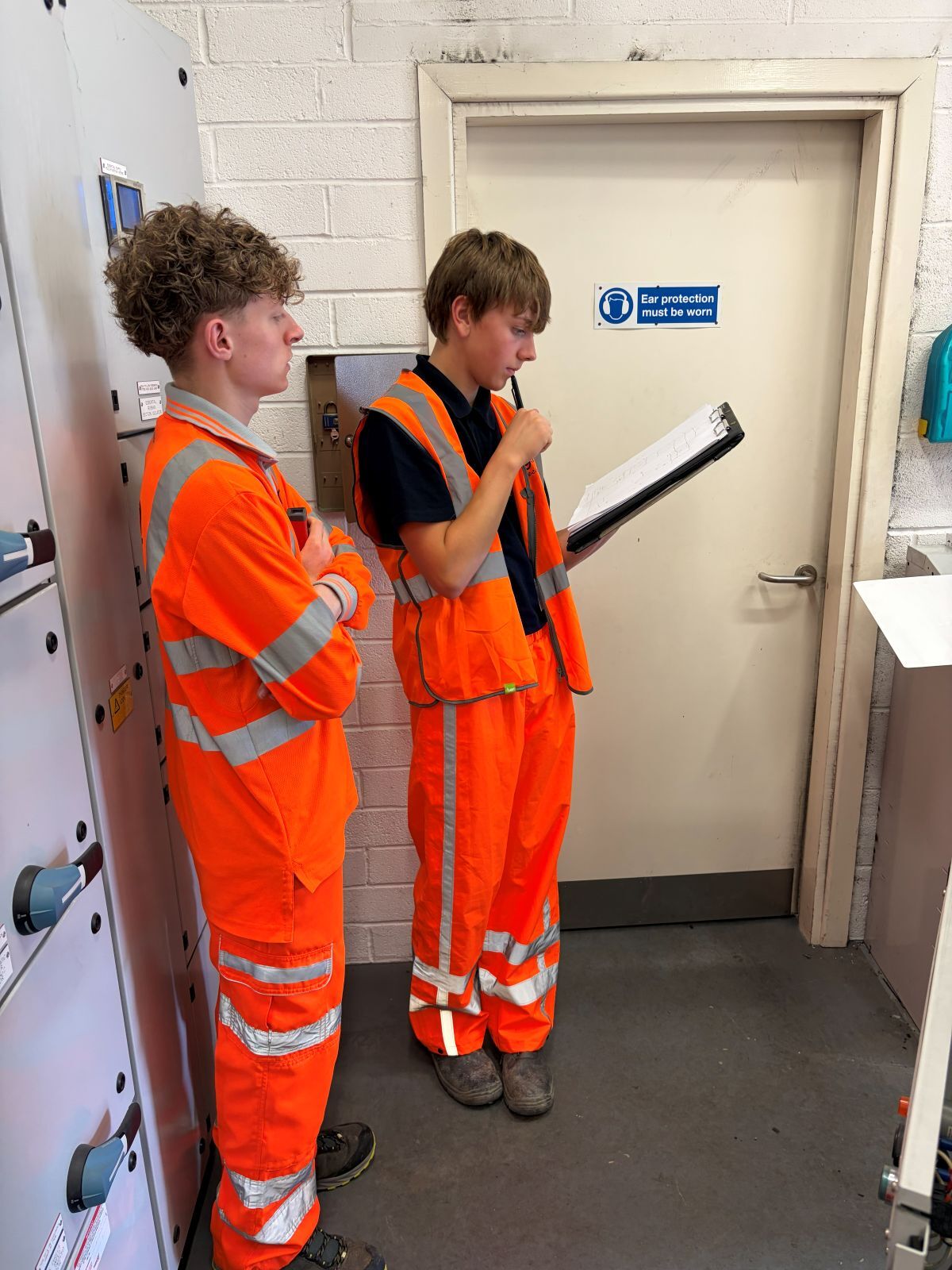
Offering T Level placements is a new aspect of AGH’s long-standing relationship with York College and one that the company will continue to embrace following Jackson’s successful integration.
“A big motivation for us taking on a placement student was the social value factor,” Adam declared. “We like to place a big emphasis on working with local schools, colleges and universities and our link with the college is something that's always been there.
“In the past, we've sent our staff on Engineering courses and we found the T Level quite an interesting qualification with the placement element. We need to bring people into the industry and the T Level is a very good way of them experiencing the industry before making that decision.
“It's a very rewarding thing to do and should be heavily considered by any company because, being able to support a student gain some industry experience, even if it doesn't materialise into a job, will contribute to preparing them for the workplace. Clearly, as we've seen, there's also an opportunity to offer an angle on recruitment, because you see how a student operates in your work setting.
“It's widely publicised there’s a skills shortage in this country and I think that’s something everyone needs to stand up and look at. As an SME (Small and Medium-Sized Enterprise), we try and punch above our weight to really promote and encourage that.
“We need new engineers with good skillsets and that’s why we will actively continue to work with York College to improve the industry in general.”
For any first-year T Level students seeking advice on how they should approach the placement interview process, Adam adds that Jackson provided the template for a top candidate.
“When we’re looking to bring somebody in we want to see if they can communicate, whether they will integrate into the team and if they are interested in the topic,” Adam explained. “Jackson came prepared with things he'd already researched and questions that demonstrated he was interested in the rail industry.”
That enthusiasm - and the impact he has made - means Jackson is already on the long-term pathway with AGH to becoming a Chartered Engineer, following the firm’s commitment to offer him a full-time role next summer.
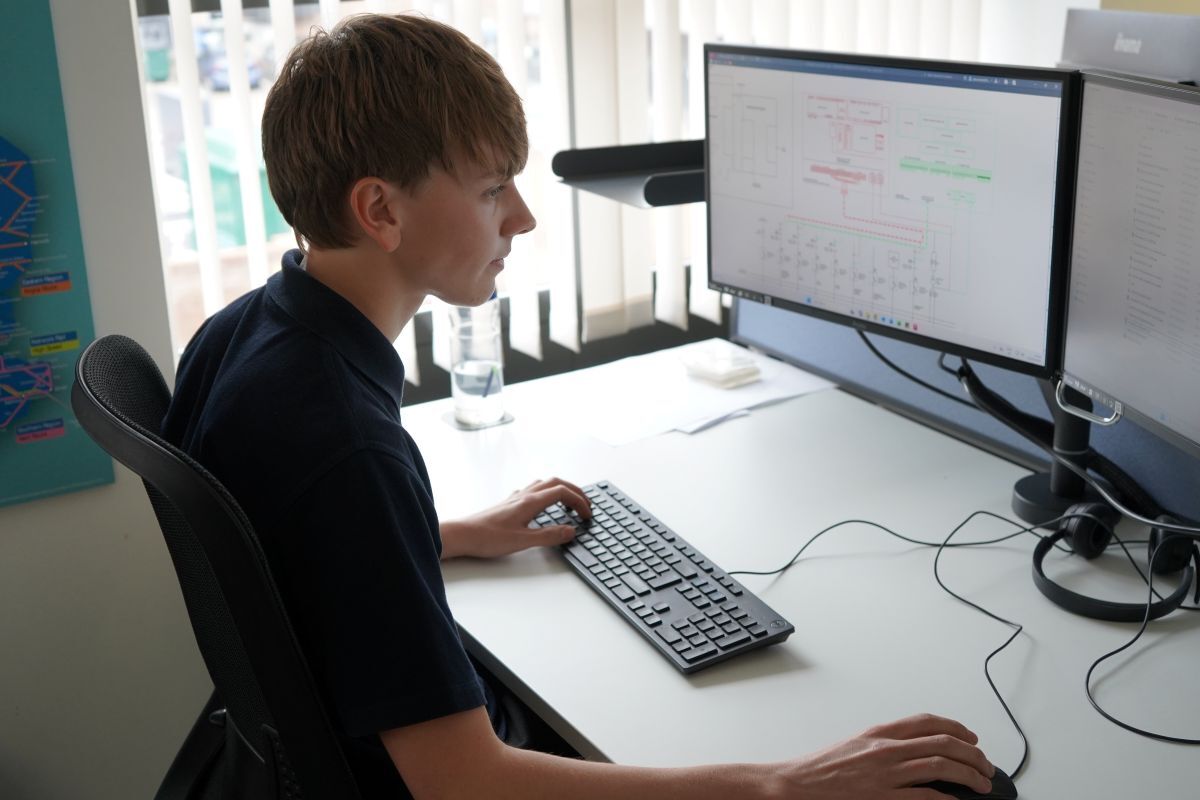
His work, meanwhile, will be verified by the Institution of Engineering & Technology (IET), whose seminars he is already attending for Continued Professional Development (CPD).
“Jackson is now aware of what a career in Engineering would look like, certainly from the rail industry side of things,” Adam said. “Our entry role is Design Technician and he will then have the full support to progress over the years and become a Chartered Engineer. That’s our aim for anyone starting in the Engineering field with us.”
For Jackson, that is a very exciting prospect and he believes that opting for a T Level when he was considering his post-16 options has now placed him in a more advantageous position than if he’d chosen a different education pathway.
“I’ll be getting a full wage but also doing a HND over six years with The Open University, which the company are paying for, so I feel I’m in a much better position than if I’d done A Levels,” he reasoned. “There's good progression here, too.
“There are four or five tiers and, if you do well every couple of years, you move up.”
On the signal box solution that has impressed influential figures in the rail industry, Jackson is typically modest but did admit: “I’m proud because there's been investment into it and it’s going to make a difference.
“Before, if just one of the boxes was damaged by a rat, or even an unlucky spider, it was creating a short circuit that would stop trains being able to run on miles and miles of track.”
While Jackson has brought a fresh perspective to the AGH office, he is also grateful to be acquiring knowledge from a variety of experienced role models, including 80-year-old Andy Windass, who was awarded an MBE for his services to Engineering by Princess Anne in March at Windsor Castle.
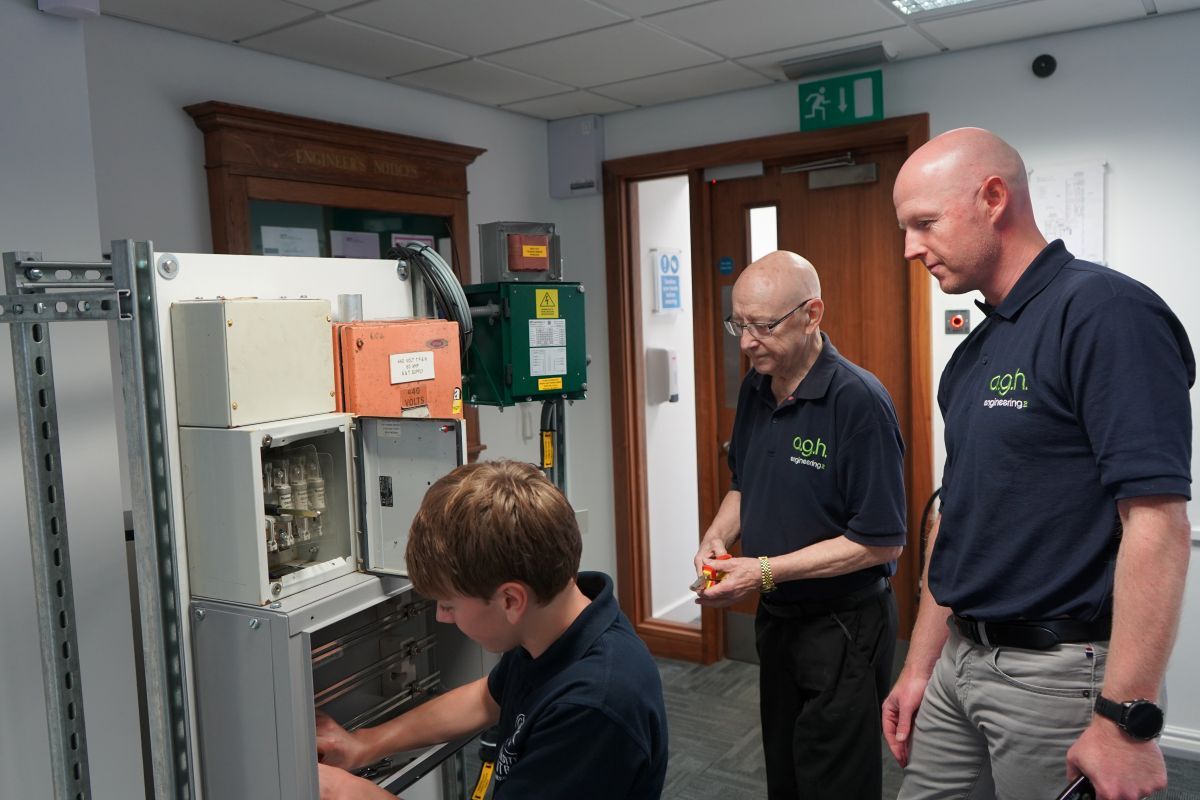
Like Adam, Andy is also a former York College student, dating back to the early 1960s, with Jackson confessing: “I've never been in a working environment with people of all ages.
“Some of them are a few years older than me and some, like Andy, are a lot older. He just never retired!
“Having that diversity has definitely helped with my ability to communicate with different people. There are huge differences between myself and Andy, but I’ve worked quite closely with him, because he's very informative.
“He does a lot of the reviewing and often gives the final approval for my work because he's got a lot of knowledge.”
Jackson first considered Engineering as a possible career option after opting to study the Design & Technology GSCE at All Saints School.
He had always liked tinkering with bikes and servicing his fishing equipment, too, and added: “People are always saying Engineering is a good career to get into and I like thinking things through and coming up with solutions.
“The T Level at College seemed like a good mixture, with it being a recognised qualification, but also a bit more practical and specialised.”
Jackson was proactive, meanwhile, when considering what area of the Engineering sector he wanted to seek a placement in.
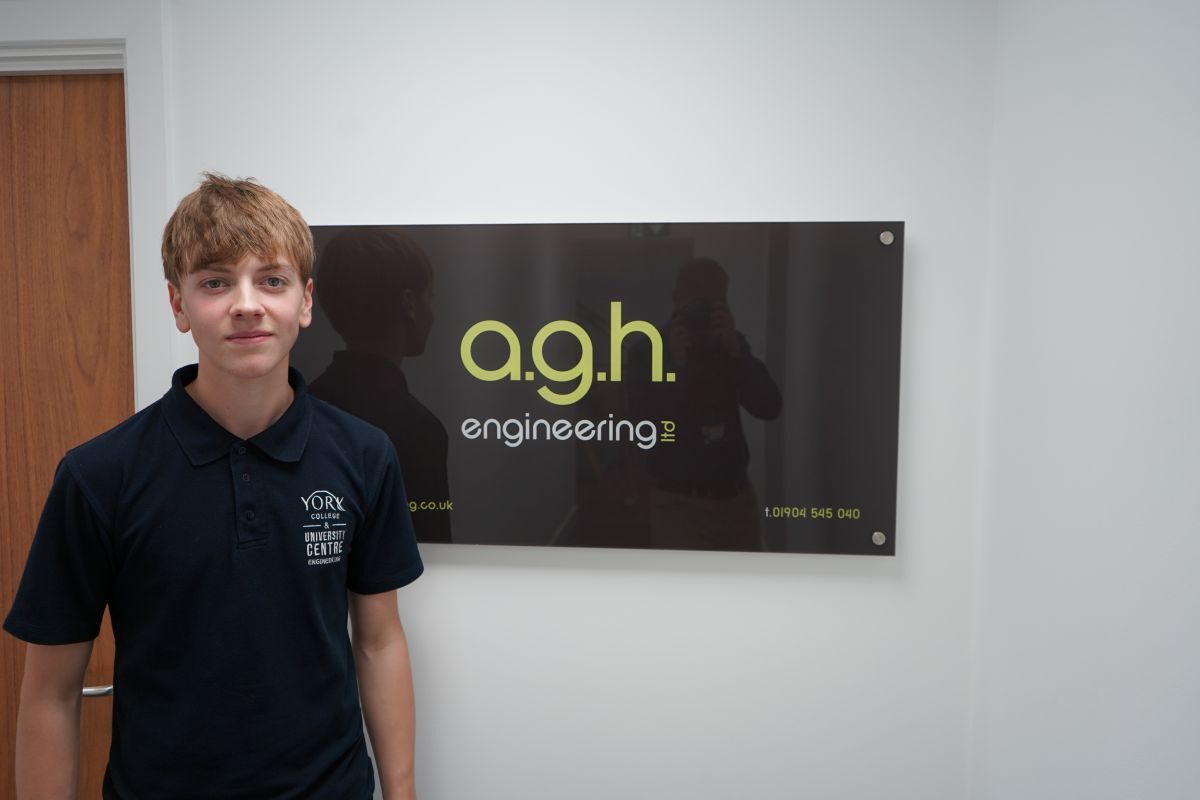
“I knew I wanted to do electrical because there's a lot of it in and around York,” he reasoned. “I also felt I was alright, theory wise, during the electrical lessons we had in College so, when I was looking for a placement, I got in contact with a lot of the electrical companies around here and, when I spoke to AGH at the interview, I really liked what I heard.
“It was the placement I was interested in the most. They had a better website than the other companies and there was a lot more about them online.
“They seemed very professional and were in constant contact over the phone and by email, so I was really pleased when they said they’d be happy to take me.”
Prior to shining on placement, Jackson had excelled in the classroom during his first year of studies, being presented with an Award of Excellence for a toy train project.
He also enjoyed working with CAD, the electrical lessons and learning about mechanical principles – all of which provided him with an armoury of skills and knowledge that he was able to take into the workplace.
“A lot of the professional skills we get taught at College have been relevant to what I do with AHG, as have some of the Maths and CAD work,” he said. “It’s different software to what we use at College, but I’ve picked it up really fast, just because it's all quite similar.
“A lot of what I’ve then learned on placement is the application side of things. College teaches us how to do it but can’t give us actual real-life projects.
“Here, I can go out to sites, survey, take photos and then figure things out using CAD before doing all the calculations and sending out a schematic for the installers to use.”
To learn more about our Design & Development: Engineering & Manufacturing T Level course, click here
Want to discuss any of our degree, higher-level, vocational, T Level, A Level & Mix and adult courses or apprenticeships with our expert team of tutors and check out our state-of-the-art facilities? Then, please come along to our next Open Event. An overview of what to expect and upcoming dates is included here