How Creative Courses Turn Passion Into Careers
Most people who work in the creative industries started in much the same way. A sketchbook that filled faster than it should have. Evenings lost to a sewing machine, a camera or a piece of design software. Work made for no reason other than wanting to make it.
Then comes the question that stops a lot of people. Is this a real career, and am I the kind of person who gets to have it?
You almost certainly are. Talent matters far less than most people assume. What actually separates the people working in design studios, fashion houses, film sets and galleries is that at some point they got access to proper facilities, honest feedback and the time to build a body of work. That is what a course gives you, and it is available to you whether you are coming straight from Level 3 study or returning to education after twenty years away.
York School of Art has been doing this since 1842, when we became one of Britain's first provincial art schools. We have supported generations of artists and designers since, and the reason people choose us over a larger institution tends to be the same each year: smaller class sizes, tutors who still practise in the industries they teach, and studios, workshops and a gallery you can actually get into rather than queue for.
What Are The Two Routes Into Creative Higher Education
There are two ways most of our students reach degree-level study, and which one applies to you comes down to what you are holding now.
If you already have a Level 3 qualification, such as A Levels or a BTEC Extended Diploma, you can apply directly to a degree. If you want a year to work out your specialism first, our Foundation Diploma in Art & Design sits between Level 3 and degree study and is designed for exactly that.
If you do not have A Levels, or you left education years ago, the Access to HE Diploma (Art and Design) is your route. It is a Level 3 qualification that universities recognise as an alternative to A Levels. You do not need to go back and collect qualifications you missed first.
What The Access To HE Diploma Actually Involves
The Access course is validated by Skills and Education Group Access, an awarding body licensed and regulated by the Quality Assurance Agency for Higher Education. That regulation is what makes it count with admissions tutors.
- Entry requirements are a Level 2 English qualification plus evidence of your ability in art and design, normally a portfolio. There is no maths requirement and no A Level requirement.
- The timetable is built around people with jobs and families. Full-time is one year, attending Mondays and Wednesdays. Part-time is two years, attending Mondays in Year One and Wednesdays in Year Two. That is genuinely two days a week, not two days of class plus five of assignments dressed up as flexible study.
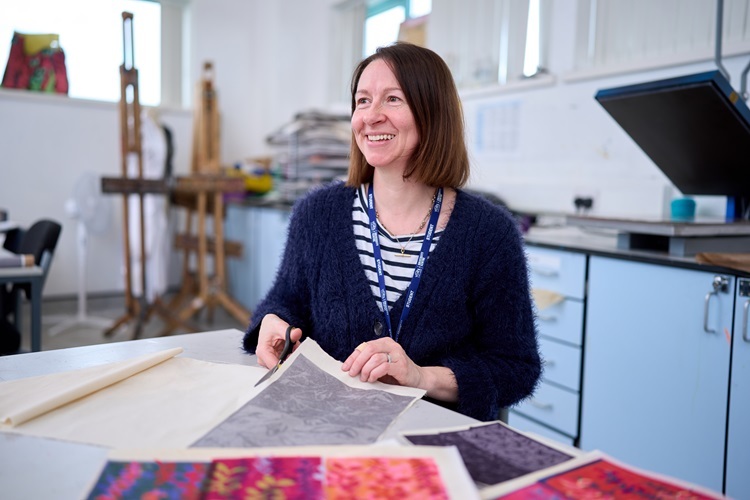
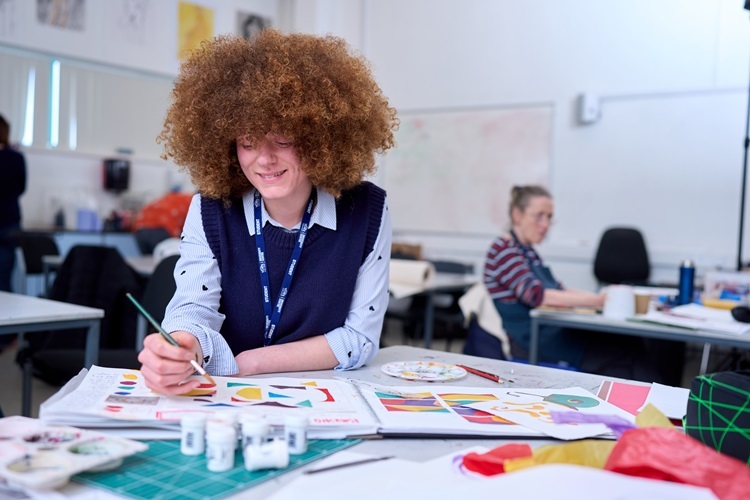
- What you study starts broad: You work across a wide range of materials and processes, then move through projects in digital art, painting and drawing, textiles, book art, 3D and printmaking. In the later stages you take on self-directed briefs and start narrowing towards a specialism, whether that turns out to be graphics, fine art, textiles or 3D craft.
- Assessment is entirely coursework: Every project is assessed against a published set of criteria. There are no exams, which matters to a lot of people coming back to education after a bad experience of them.
- Materials are provided: You will want access to a laptop and Wi-Fi at home for the guided learning hours outside class, but the art materials are covered.
You can see how Access fits alongside our other adult routes on our Access to Higher Education page.
The Degree Courses And What They Lead To
Our University Centre runs degrees that map onto real creative jobs rather than general art study. Here are some of the creative degrees you can study with us:
BA (Hons) 2D Creative Practice* runs over three years at two days a week. Through studio projects, workshops and contextual study, you will explore image-making, typography, visual language, photography, digital processes, print, surface pattern and bookmaking.
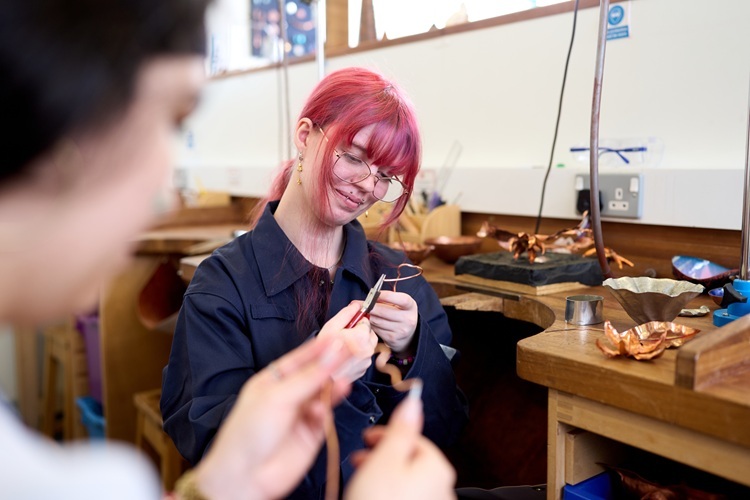
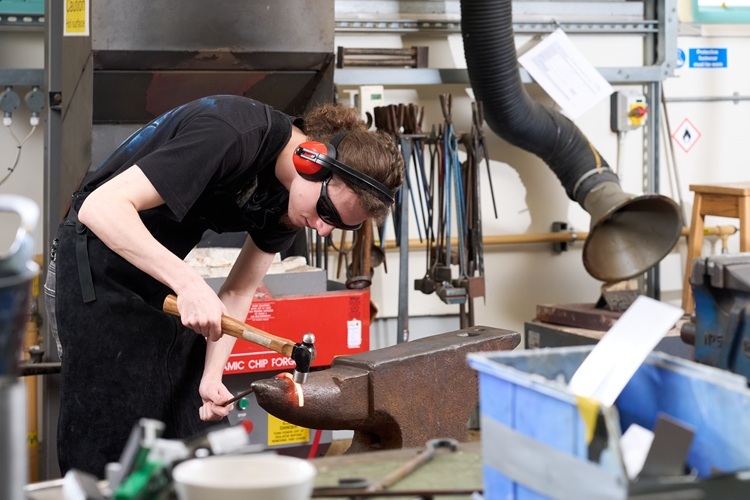
BA (Hons) 3D Creative Practice runs over three years at three days a week, in workshops where you will weld, cast, throw, carve and build. It suits people who want to make objects rather than images.
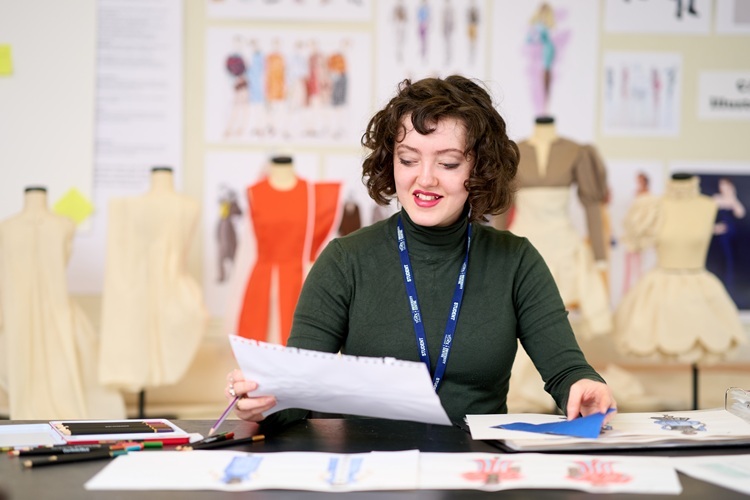
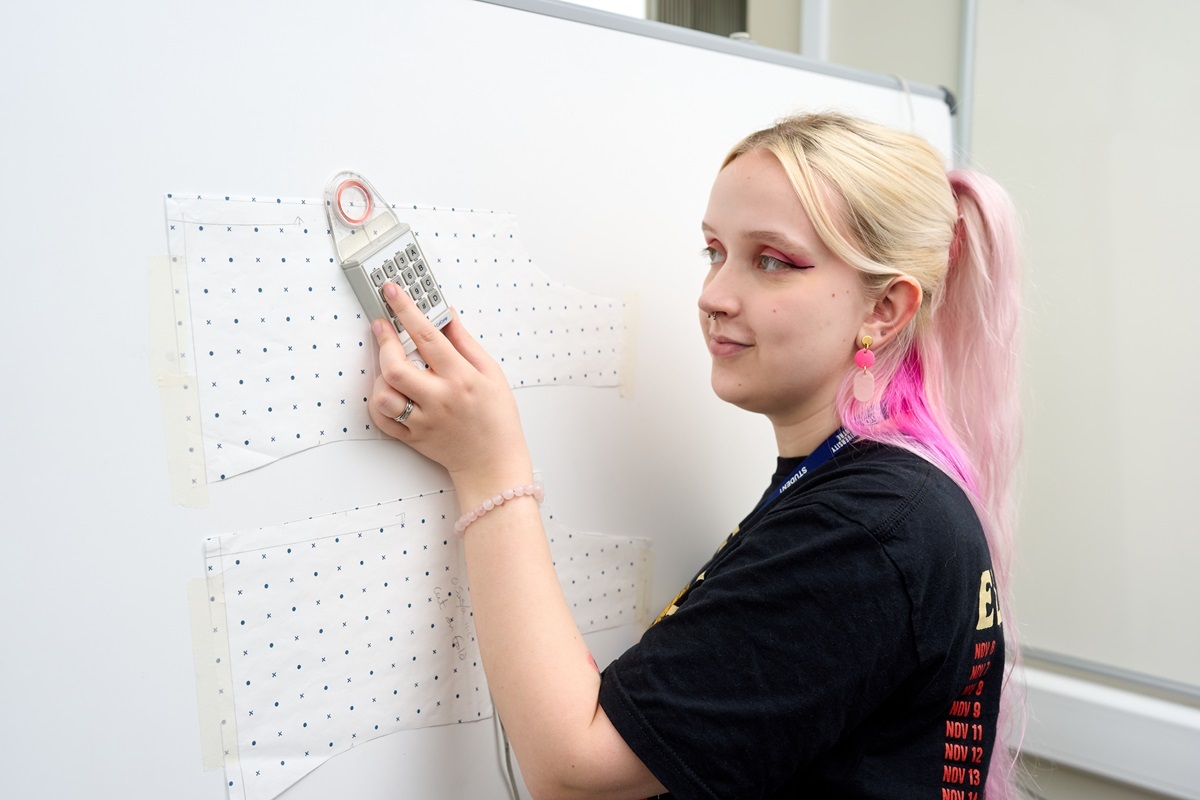
BA (Hons) Fashion Design & Garment Technology also runs over three years at three days a week, and covers the technical side as well as the design side, including industry pattern-cutting technology. The garment technology half is what makes graduates employable in production roles, not just design ones.
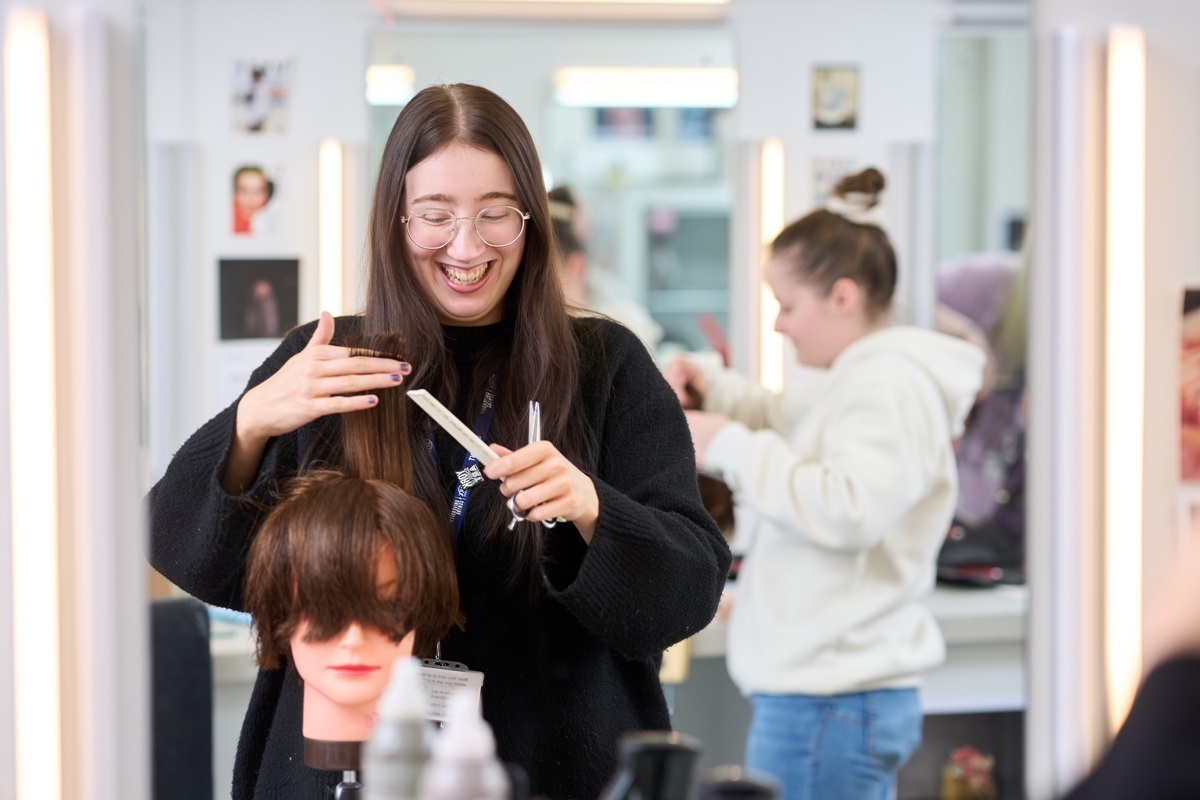
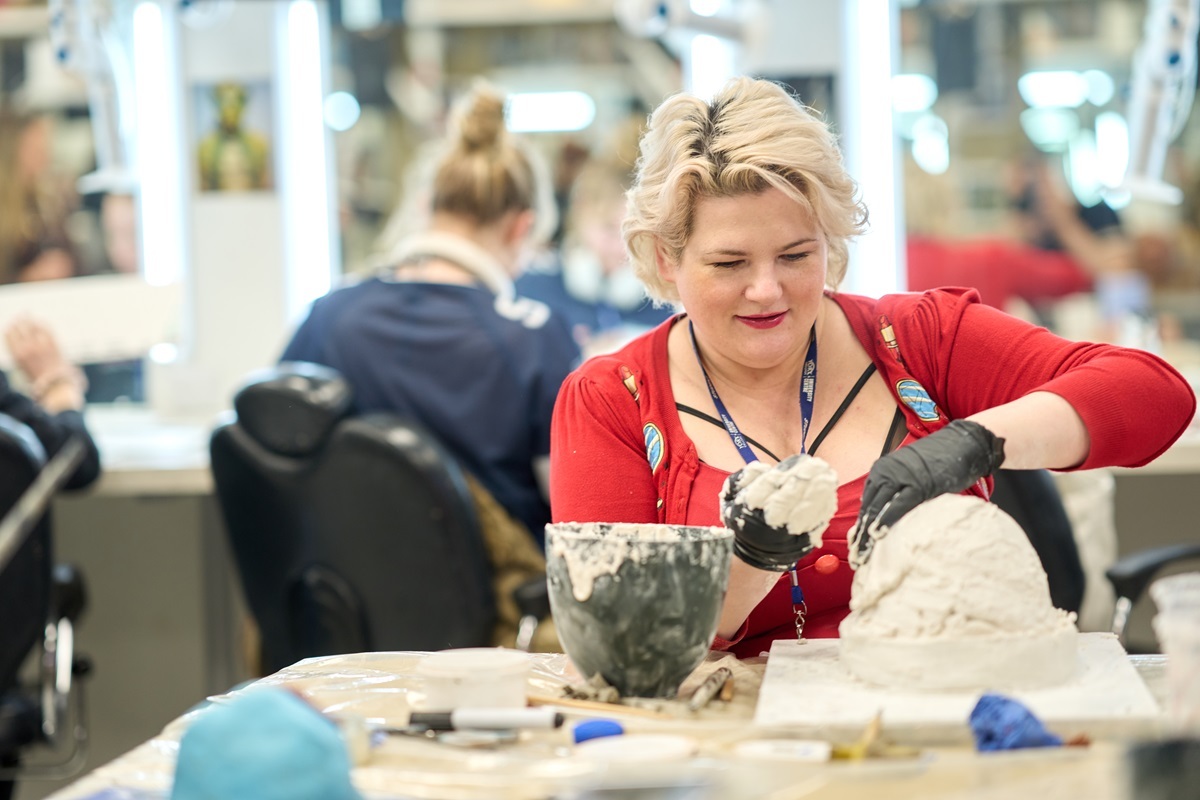
Foundation Degree (FD) Media Make-up, Prosthetics & Hair Design* and BA (Hons) Media Make-up, Prosthetics & Hair Design (Top-up)* takes you into prosthetics, wig-making and make-up for screen and stage.
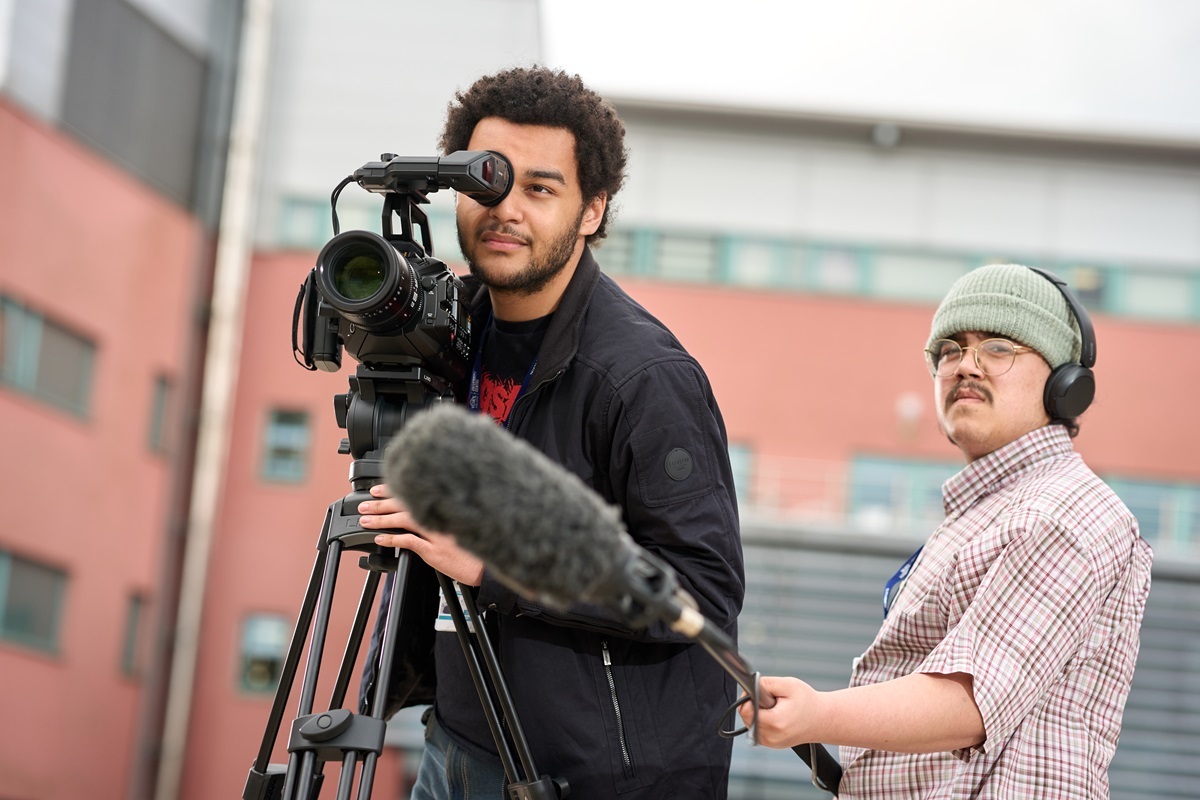
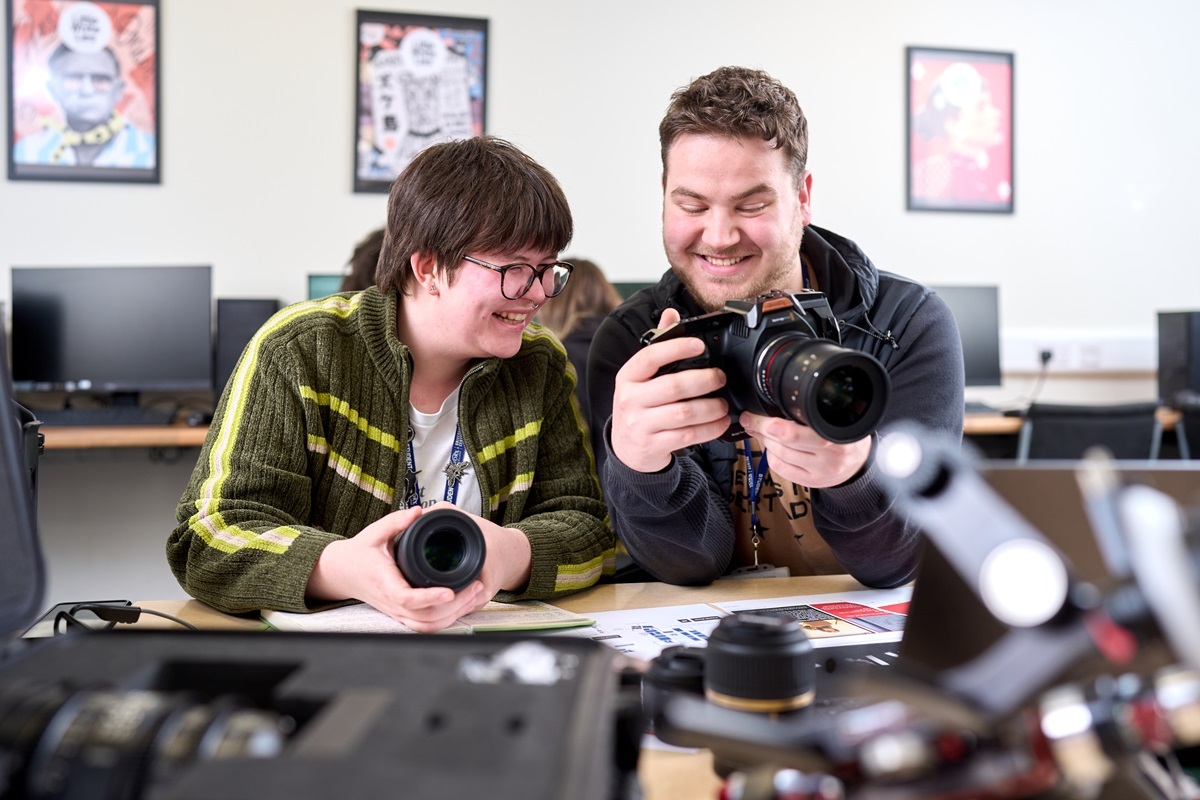
BA (Hons) Film Production & Professional Practice builds practical production skills alongside the working habits the industry expects.
If you are unsure what the different qualification levels mean, our guide to undergraduate qualifications sets them out plainly.
Why The Portfolio Matters More Than The Grade
In most industries, the qualification opens the door. In creative industries, the portfolio does, and the qualification is what got you the time and the facilities to build one.
A strong portfolio is not a collection of your best finished pieces. Admissions tutors and studio hiring managers want to see the thinking: the research, the rejected directions, the point where a brief went wrong and you fixed it. That is why our courses are built around briefs and self-directed projects rather than technique exercises.
On the Access course, you also get direct help with this. You visit the UCAS fair, you get support putting your UCAS application together and you get guidance on selecting and presenting work for portfolio review.
Where Our Students Go Next
Access students have progressed to degree courses across the country, including Wimbledon College of Art and Design, Northumbria University and Manchester Metropolitan University, in subjects ranging from architecture and animation to surface pattern design, illustration and branding. Completing the Diploma also means you can apply to our own degrees here.
The career destinations our art and design students move into include animation, architecture, branding, education, fashion, graphic design, illustration, interior design, photography and surface pattern design.
Some graduates join studios and agencies. Others build freelance practices or their own businesses. Both routes rest on the same underlying skills: solving a problem visually, taking direction, working to a deadline and communicating why you made the choices you made. You can see how we work with employers on our industry collaboration page.
What It Costs And How People Pay
If you are aged 19 to 23, you may qualify for fee remission on an Access course, depending on your circumstances. Eligibility follows government guidelines and our Funding Team can check your situation.
If you do not qualify, you can pay in instalments or apply for an Advanced Learner Loan. That means no tuition fees up front and no repayments until your salary rises above £27,525. There is one detail worth knowing: if you take an Advanced Learner Loan for an Access to HE Diploma, the loan is written off once you successfully complete your higher education programme. In practice, that can make the Access year free.
For degree-level study, standard student finance applies. Our funding your studies page covers the details, and funding for adult courses covers the Access side.

Frequently Asked Questions
No. The Access to HE Diploma is designed as an alternative to A Levels and is accepted by universities across the UK as a Level 3 entry qualification. You need a Level 2 English qualification and evidence of your ability in art and design to join it.
For Access, we are looking for evidence of ability and potential, not a polished professional portfolio. Sketchbooks, personal projects and work made outside any course all count. Building a strong portfolio is what the course is for, so you are not expected to arrive with one.
Yes. The Access course runs part-time over two years on Mondays only, or full-time over one year on Mondays and Wednesdays. Our degree courses run two or three days a week rather than five, which leaves room for employment around them.
The qualification is the same level and carries the same UCAS recognition. What differs is the environment. Class sizes here are smaller, you get more one-to-one time with tutors and you are taught by practitioners who have worked in the disciplines they teach. Our University Centre FAQs answer more on this.
This is the most common worry we hear, and Access exists precisely for people in that position. Teaching starts from the assumption that you are rebuilding study habits, and support is available throughout. Our mature students page and student support services set out what is available.
Not on the Access to HE Diploma. All work is project-based and assessed against published criteria. Degree courses are also assessed largely through projects, portfolios and written research rather than examination halls.
Teaching spans three floors of art and design facilities, including a gallery, studios, 3D and printmaking workshops, photography and fashion studios and Apple Mac suites. Access students work mainly in a well-equipped studio with access to the print workshop and digital suite, plus college-wide facilities such as the Learning & Research Centre.
Access and adult courses are applied for through our application page. Degree courses are applied for through UCAS, and our how to apply guide walks through it. If you would rather see the studios first, book onto an Open Event.