
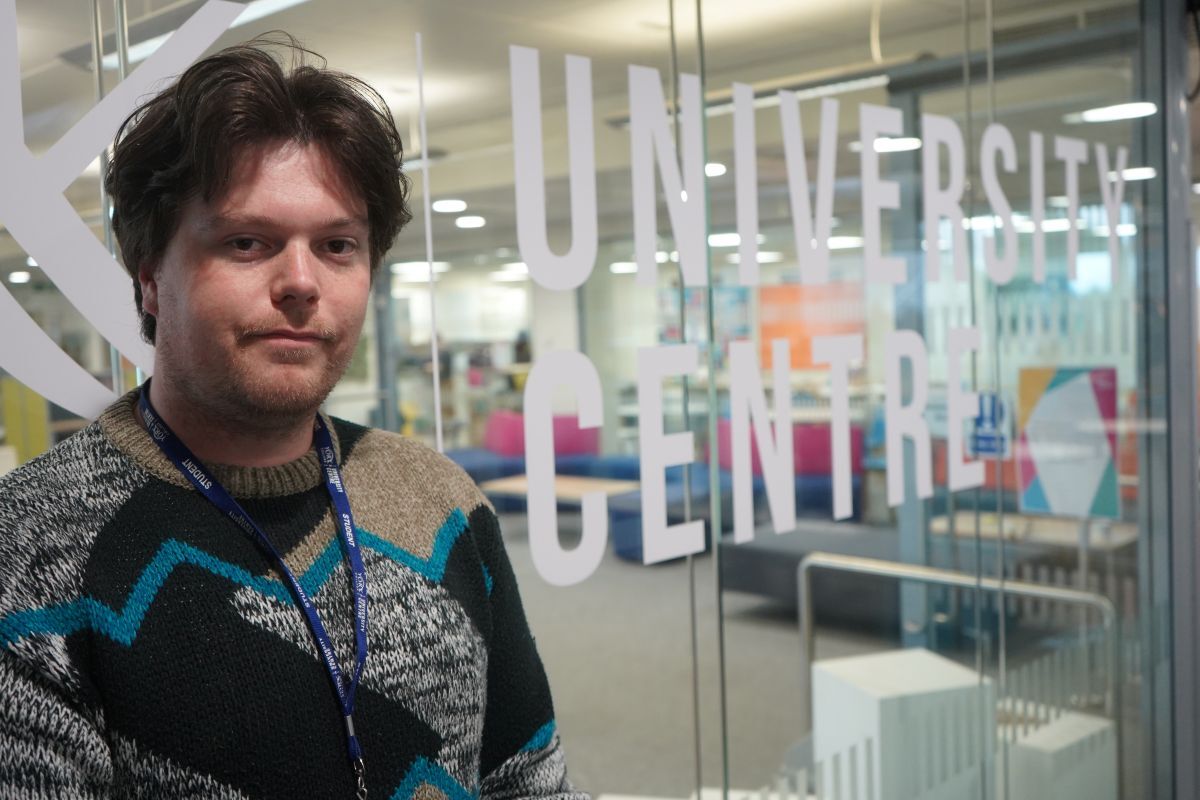
Kierran's going to Cambridge a decade on from dropping out of college with four AS Level U grades
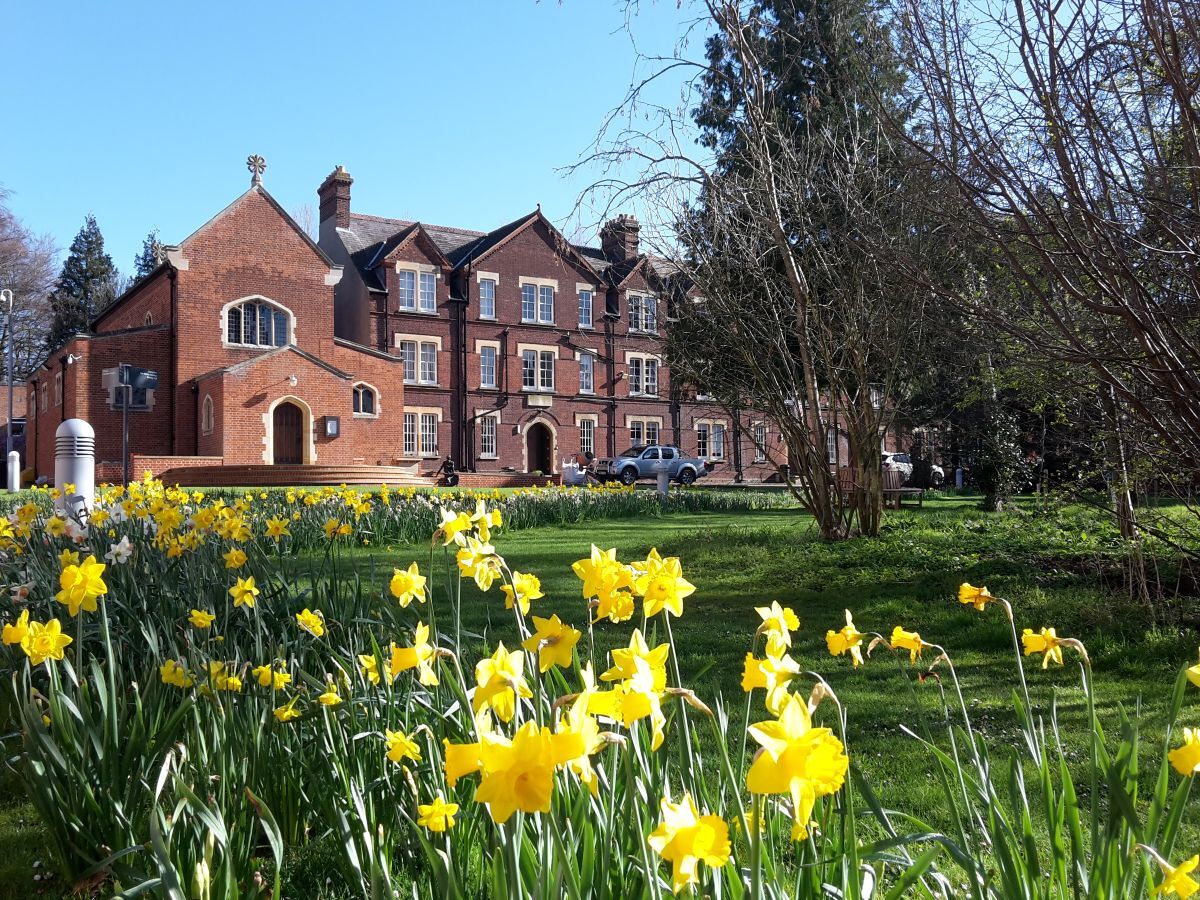
York College student Kierran Horsfield has secured a place at the University of Cambridge more than a decade on from dropping out of education after receiving four U grades in his AS Level exams.
Now 29, Kierran returned to College last September to enrol on our one-year Access to Higher Education Diploma in Humanities course and the transformation in his results could not have been more spectacular.
He has gained Distinction grades across the board and will now start a History degree at Cambridge’s St Edmund’s College in three months’ time.
It is the best possible reward for Kierran’s brave decision to give up his stable job as a Support Worker, after being inspired by a conversation in the Golden Ball pub with another former York College Access student, who progressed on to a Law degree at the University of York.
Kierran admits he was “terrified” on his return to education after his last “absolutely catastrophic” experience but, with the support of his “extraordinary” tutors Alison Willis and Adam Tomes, he exceeded all his expectations, having only added Cambridge to his UCAS application as an arm-chancing exercise, believing that he would prefer to stay local, at his age, if he was to make the step into Higher Education.
After finding out he had been accepted to Cambridge having opened the email queuing up for a Costa, though, he is now putting no ceiling on his future, joking that he is targeting “nine degrees and two University Challenge trophies!”
Reflecting on his inspirational journey, Kierran said: “I failed my AS Levels when I was 17 in 2014. I got four Us, so it was absolutely catastrophic really and I hadn’t even seen it coming. I decided then that I didn't want to do resits because I felt I was going to make all the same mistakes and a year is a long time to just experience that over again so, after saving some money, I went travelling when I was 18.
“I then got a job as a Support Worker for people with brain injuries and autism-based learning difficulties and did that for seven years. I felt I’d found the one job I could do that felt like a vocation, was really good at and didn't require me to have a degree.
“It was really rewarding, but also really hard work that takes a lot out of you and you can't really go very far with it, career wise, unless you're willing to forfeit a lot of the things that you enjoyed about it in the first place and I got to the point where I could picture myself in 20 years still doing exactly the same thing and sort of running that treadmill for the rest of my life.
“That started to become intolerable and, one night, when I was whinging about it at the Golden Ball, one of the regulars – a friend of mine called Ben – told me how he’d done an Access course at York College and was now studying Law at the University of York. He told me I should go for it, that he was sure I could do it and that I’d be supported and he was absolutely right.”
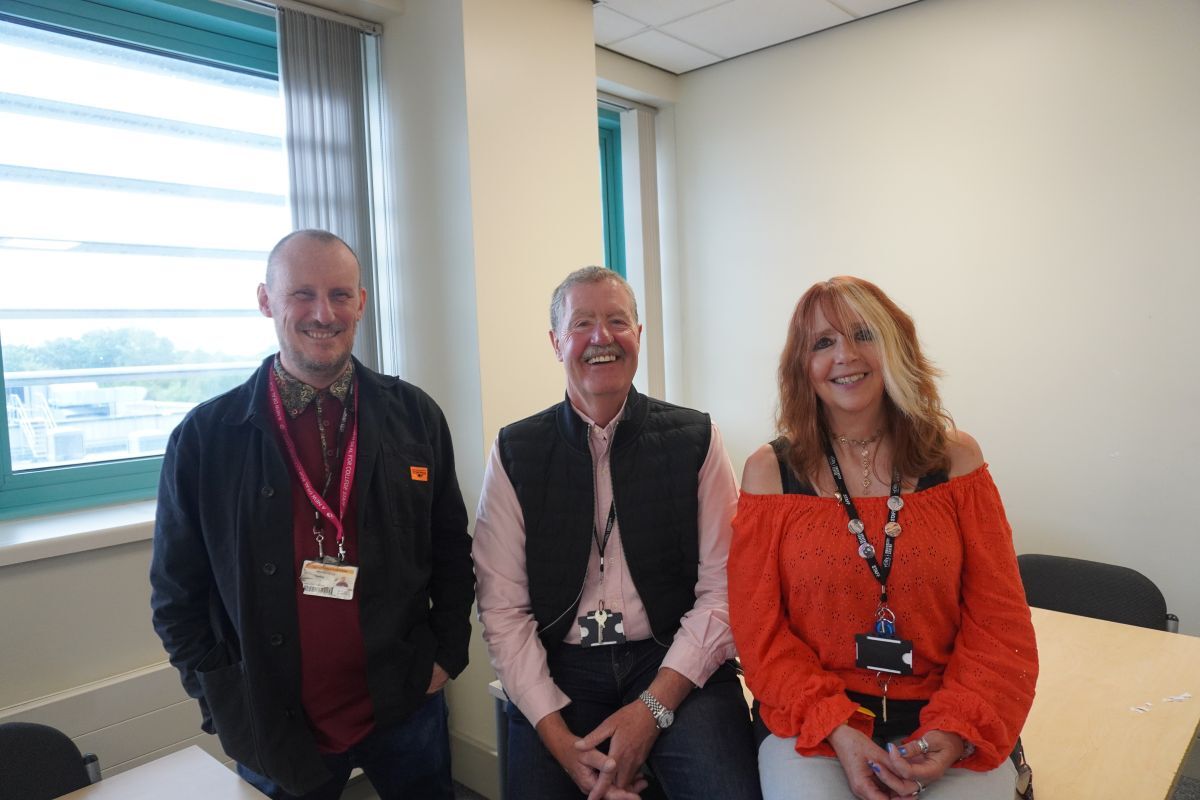
That support was predominantly provided by Kierran’s History teacher Adam and English Literature tutor Alison, who he holds in the highest of regards.
“Adam and Alison have been absolutely extraordinary,” he declared. “I could sit and listen to them talk about their subjects for hours - they're brilliant people and extremely knowledgeable.
“They get to know their students as well as they can and give up a huge amount of their time and energy. They're incredibly kind and tolerant individuals and I’m so very, very grateful to them.
“They made me feel really, really supported, seen and known from the start and have been 100% there for me 100% of the way, because I didn't even know how to write an essay when I started the course! I was terrified to submit my first piece of work to them just for checking over, so it was a nice surprise to work out that I could do it and had skills that could be developed.”
Since the shock he felt after his AS Level results, Kierran has also now gained a greater understanding of the reasons behind his struggles.
He has been on the waiting list to be diagnosed for ADHD for the past four years and, although he is yet to be assessed, has welcomed an approach from his tutors that has recognised he requires a level of support normally linked to that condition.
“I always knew I wanted to go back to academia but knew there was something fundamental going on that I had to overcome first,” Kierran explained. “I think if they hadn’t invented ADHD but a psychologist spent two hours with me, then they would go on to invent it!
“I was waiting for a diagnosis to see what support I could get before jumping back into education, but I couldn’t wait any longer and the informal support I've received from Alison and Adam has been absolutely amazing and I think I would have really struggled without that. If I wasn’t in a class, they’d send me the notes and, if I needed particular support with some aspect of an essay, that was also freely given and there was a lot of tolerance for the fact that I was the class motormouth.
“Even though I haven’t got the diagnosis yet, they behaved as though I had. The intimate level of teaching that I've been able to access with York College has just meant my support needs have been met.
“Now, I’m hoping that, when I start my degree, I will have the diagnosis to support me with whatever I need.”
As part of the Cambridge application process, Kierran was required to write a second personal statement in addition to the one he had provided for UCAS.
He was then asked to submit two examples of his written work, before completing an exam remotely, where he picked a question on the relevance of studying medieval history today from a choice of five.
Admitting it was a “perfect” option for somebody who wants to become a medieval historian, he went on to be interviewed online and, then, endured a two-week wait for news on whether he’d been successful.
“Before the interview, I’d looked at going to Cambridge as an unlikely bonus but, after it, knowing if I’d got in was all I could focus on,” he admitted. “I didn’t get any work done during those entire two weeks and I’d let Cambridge get their hooks into me!
“When I’d started the course, I didn't think in a million years that I’d get into Cambridge. It felt mad for me to aim for Cambridge when the only evidence I had of academic achievement was four Us at AS Level.
“I thought that there was a very reasonable chance that I was going to scrape my way through the course and would be lucky for any university to offer me a place. I wasn’t even really willing to relocate cities, either, because I'm nearly 30 and all of my friends are here and York is ultimately where I want to be.
“So, I applied for the University of York, York St John and the University of Leeds, which are all great places to study but, then, I sort of ran out of local universities so thought, ‘Oh well, you know, I might as well apply for Cambridge just in case’.
“Alison was also very, very encouraging that I should apply to those top-end universities and told me of other students she’d helped get to Cambridge. I thought I probably had a one in 50 chance and that something very absurd would need to happen for that to be a possibility.
“But the chance just became more and more likely as time went on, until suddenly I got the offer and, as much as I wanted to stay in York at this stage in my life, who’s going to say no to Cambridge. That’s probably not a very good idea!
“Cambridge is also a brilliant city and I'm looking forward to the pomp and ceremony a bit.”
Recalling the moment he received his life-changing news, Kierran said: “In your head, you picture it looking a particular way but, as it happened, I found out while I was waiting for my coffee in a queue at Costa, who I used to work for as a barrista!”
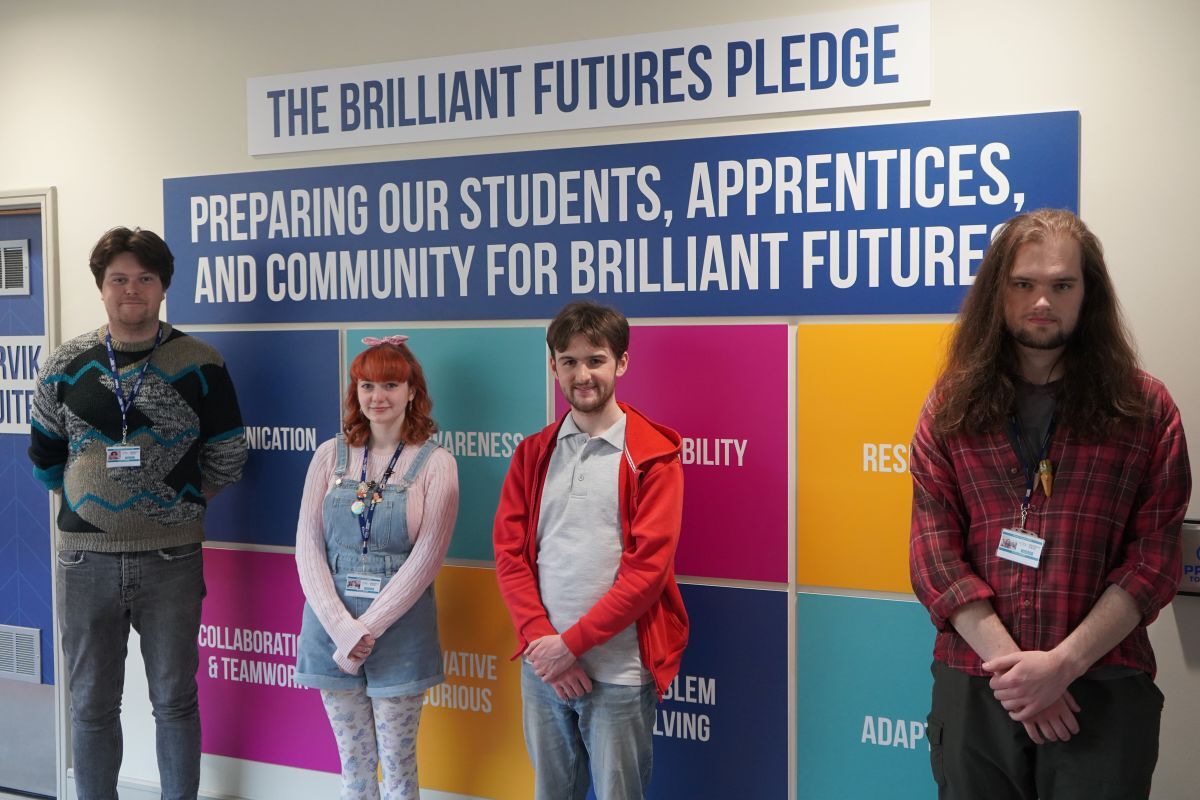
Kierran is happy, too, that he will continue studying History alongside his York College Access course classmate Maurice Cooper, who has also secured a place at St Edmund’s – one of three Cambridge colleges for mature students.
Fellow Access course students Poppy Jeavons and Isaac Lees will be there too and Kierran pointed out: “It helped me apply for Cambridge, knowing that Maurice was thinking of doing the same thing.
“We became friends quite quickly at the start of the course and, where possible, we’ve read each other's work and critiqued and advised. I think we've really lifted each other up.
“I’m pleased we’re going to a mature student college, too. The idea of the rest of my cohort being 18 or 19 wasn’t massively appealing.
“Also, if I’d gone to another uni living in halls wouldn’t have felt appropriate and I’d have been looking at the private rental market. But, at a mature student college, I’ll be able to live in halls now, which will make things a bit more affordable.
“My cohort - the people around me - are going to be my age, too, which is going to make the whole experience a lot better.”
That experience will also be enhanced by the readiness for Higher Education study Kierran now feels thanks to the Access course.
“There are a lot of skills I’ll take with me from the Access course that I wouldn’t have by just doing A Levels,” he declared. “I wouldn't know how to do Harvard referencing, write a proper bibliography or structure essays properly.
“The course has been really good preparation for degree level study in terms of how you go about research as well.”
He added, meanwhile, that the Access course’s emphasis on assessment throughout the year, as opposed to primarily during an exam at the end, suited his preferred method of learning and is more relevant, too, for his next steps into academia.
“It’s been really good not having my entire destiny hinge on exams in that moment where it’s do or die,” he reasoned. “I really struggle to switch on that part of my brain sometimes.
“I had that during my Ancient History exam when I was 17. I literally stared at my AS paper for the full three hours.
“The only thing I actually achieved was writing self-deprecating haiku in the extra writing section, so I'm sure whoever examined my exam paper was slightly worried about me but maybe thought that there was a good haiku poet in there somewhere!
“So, being able to go, ‘No it’s not happening today, but I can come back to it tomorrow because I know when the deadlines is’ has been great and that's obviously how the rest of an academic career would look by and large. It’s certainly not exam based and is often more about research.”
Understandably, given the transformative impact they have had on his life, Kierran now feels Access courses are an “important lifeline” for anybody who, for whatever reason, wasn’t able to fulfil their academic potential in their mid-to-late teens.
“The evidence shows that Access courses are absolutely essential, especially for anybody who dropped the ball for whatever reason or circumstances during their A Levels,” he said. “It’s a really important lifeline that needs to exist.
“It also allows the rest of society and the academic world in general to tap into intelligence and imaginations that would have otherwise been lost completely because of that initial failure at 17 or 18. Having the rest of your life dictated by what you did on one day at those ages feels absolutely absurd.
“Most people don’t have a fully developed frontal lobe until they're 25! People might be reticent to go back into education, but adult education is a completely different kettle of fish.
“I feel there’s more respect for your ideas and the time that you’re giving. You’re also there because you want to be. It's entirely your choice and nobody's going to make you be there, which completely changes the dynamics.
“I'd recommend it for anybody that feels like education didn't work for them but still feel like they have a lot to give intellectually to the world.”
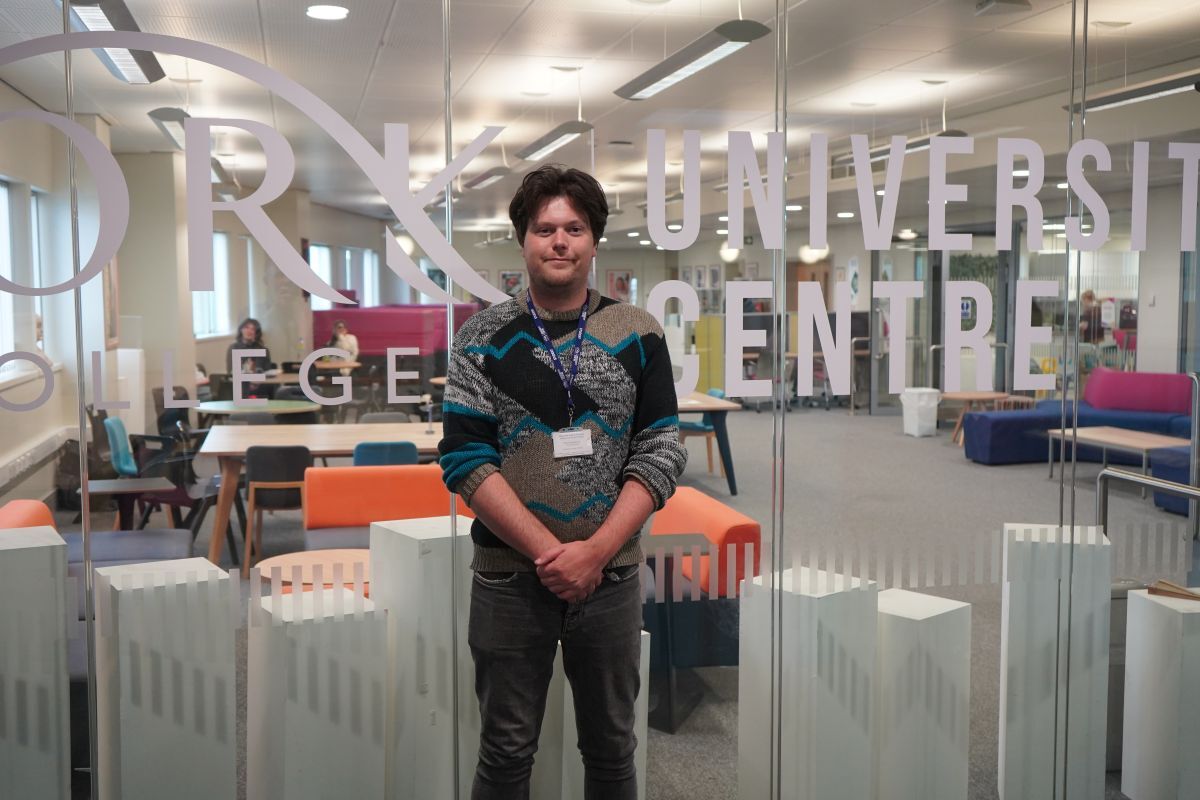
Kierran stressed, meanwhile, that being able to complete an Access course in nine months makes them an even more appealing option.
“Until I heard about Access courses, being able to get the qualifications needed to do a degree seemed so distant and unassailable,” he confessed. “So, while doing this course in one year is really intense and quite a lot of work, it means I've been able to take that next step in a timeframe that works for me.
“Moving back in with my parents also made it more manageable financially and, as much as I’ve really enjoyed this year, I didn’t want to spend more time at this stage than was absolutely necessary.”
While History remains Kierran’s biggest passion, his English Literature studies on the Access course have also unlocked new interests and talents that had lay dormant previously.
“I was a bit reticent about doing English Lit because, prior to starting the course, I probably hadn't read a book cover to cover for about a decade,” he explained. “It wasn’t that I don't love reading, but I’d fallen out of the habit and being able to look at texts in depth is something that I'd not done before, but it was great.
“There’s a lot more to English Lit than I necessarily appreciated and one of the best things that I've written during the Access course was a poetry essay, which I would have not imagined at the start of the course, so that’s a new skill that I’m pretty proud of.”
Having not so long ago felt that his potential had plummeted and then plateaued, Kierran is now looking forward to capitalising fully on the prospects that a Cambridge education could offer him.
“I've been doing a bit of research and, whilst I'd love to say that things like rankings and prestige don't matter, they do and Cambridge is ranked number one for History in the country at the moment and number three in the world, which is pretty awesome and really exciting,” he enthused. “I'm trying not to get too far ahead of myself, but I’m thinking that, if I were to achieve a First from Cambridge, it basically means that, within the history world, that is the best possible start.
“After finishing my degree, I want to throw myself fully into history and die with like nine degrees and two University Challenge trophies! I also want to write my book, which is going to be super esoteric and read by like 19 people who say it's the best book ever for anybody who really wants to know about a particular tax code system of the Byzantine Empire!
“I'm looking at PhD programmes too. I believe Harvard, for example, pays PhD History students a stipend of about $50,000 a year. I’d like to look at Eastern European and Western Asian history and I'm sure $50,000 goes quite a long way in Turkey!
“This is all with the hope that I don't find my ceiling anytime soon but, at my age, I think it's probably a good thing to have onward plans from a degree. I’m not 18 or 19 and filling in time while I work out what I want to do.
“I want a pathway and, for me, academia and authorship would be the direction I'd want to head in.”
To learn more about our Access to Higher Education Diploma in Humanities, please click here
Want to discuss any of our degree, higher-level, vocational, T Level, A Level & Mix and adult courses or apprenticeships with our expert team of tutors and check out our state-of-the-art facilities? Then, please come along to our next Open Event. An overview of what to expect and upcoming dates is included here