Engineering Courses
Do you like investigating how things work and enjoy designing and making? If you want to develop real engineering skills through lively lessons that combine practical work with the theory behind it, these could be the courses for you.
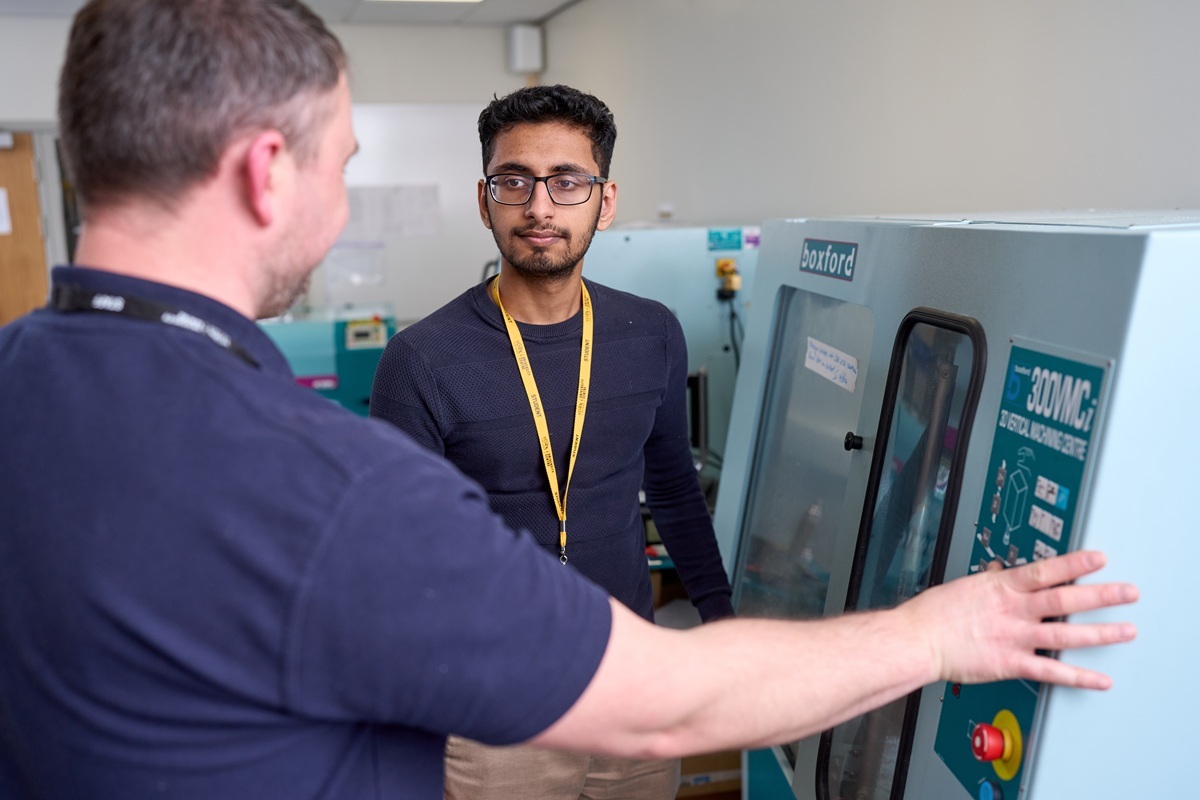
With superb workshop facilities to help you learn the skills you need and tutors who bring their own knowledge of the industry into every lesson, our Engineering Courses will prepare you for working in this diverse industry.
As part of the Yorkshire and Humberside Institute of Technology, our higher university-level courses give you the skills that employers need, whilst our state-of-the-art facilities allow you to train on industry-specific equipment.
Train in Our Specialist Workshops
There is no better way to learn engineering than by doing it.
You will spend your time in our specialist workshops and CAD/CAM suites, working with the same tools, machinery and equipment used across the industry. From welding and fabrication to turning on a lathe and computer-aided design, you will build a broad range of practical skills while learning to work safely and professionally.
If you enjoy learning by getting hands-on, our Performing Engineering Operations Level 2 course is a great place to start, giving you a taste of several engineering sectors before you decide which area to specialise in.
Build the Technical Knowledge Employers Value
Engineering is a broad industry and employers look for people who can pair practical ability with sound technical understanding.
As you progress, for example onto our Engineering & Technology Diploma Level 3, you will develop skills in:
- Welding, fitting and fabrication
- Machining and turning
- Computer-aided design and manufacture (CAD/CAM)
- Electrical and electronic principles
- Engineering drawings and materials
- Health and safety within an engineering environment
- Problem-solving, communication and teamwork
These skills apply right across mechanical, electrical, electronic and manufacturing engineering, giving you a strong foundation whichever direction you choose to take.
Put Your Ideas Into Practice
Engineering is a creative, problem-solving industry where no two projects are the same.
You will take on real design and build challenges that ask you to analyse a problem, plan a solution and produce a working component or prototype. If you would prefer a more design-led route, our Engineering Mix combines innovation, sustainability and real-world projects, and sits well alongside A Level Mathematics or Physics. These projects give you the chance to test your ideas, show what you can do and build the confidence to tackle industry challenges.
Progress With Confidence After Your Course
Engineering opens the door to a wide range of next steps.
Whether you want to earn while you learn through an apprenticeship, continue to higher-level study at our University Centre or step straight into skilled employment, our courses give you the knowledge, practical experience and support you need to succeed. As part of the Yorkshire and Humberside Institute of Technology, you will also have clear routes into advanced technical qualifications and degree-level study.
Find your course
A Level & Mix
Vocational & T Level
Apprenticeship
Courses for Adults
A Level & Mix
Vocational & T Level
University Centre
Apprenticeship
Courses for Adults


Frequently Asked Questions About Engineering Courses
No. Many students join our Engineering Courses with an interest in how things work but little hands-on experience. Our courses are designed to build your skills step by step, from essential workshop techniques through to more advanced engineering processes.
It depends on your experience and your goals. If you are new to engineering, Performing Engineering Operations Level 2 is a strong starting point, while the Engineering & Technology Diploma Level 3 suits you if you want to build advanced practical skills. You can view all of our options on the Engineering courses page.
Entry requirements vary depending on the course and level. Some courses focus on your interest and willingness to learn, while higher-level courses ask for qualifications. Each course page sets out exactly what you need, so you know what is required before you apply.
Maths is an important part of engineering, but you do not need to be an expert to begin. Your course will build your applied Maths skills alongside your practical training.
Yes. You will train in our specialist workshops and CAD/CAM suites using industry-standard tools and machinery. As part of the Yorkshire and Humberside Institute of Technology, you will also have access to state-of-the-art, industry-specific facilities.
Yes. Engineering offers clear routes to higher education, including HNC, HND and degree-level qualifications. As part of the Yorkshire and Humberside Institute of Technology, our University Centre gives you the chance to continue your studies at a higher level after completing your course.
Latest News
Engineering T Level student creates product to save Network Rail more than £1m in delay costs

Graduation award-winner Jack experiences lightbulb moment on HNC in Engineering course

REACH winner Sam is Siemens Healthineers' youngest and most extensively trained apprentice ever
Ex-England football manager Steve McClaren applauds success of University Centre graduates

York College celebrates increases in high grades for T Levels and vocational courses